
Journal Description
AI
AI
is an international, peer-reviewed, open access journal on artificial intelligence (AI), including broad aspects of cognition and reasoning, perception and planning, machine learning, intelligent robotics, and applications of AI, published monthly online by MDPI.
- Open Access— free for readers, with article processing charges (APC) paid by authors or their institutions.
- High Visibility: indexed within ESCI (Web of Science), Scopus, EBSCO, and other databases.
- Journal Rank: JCR - Q1 (Computer Science, Interdisciplinary Applications) / CiteScore - Q2 (Artificial Intelligence)
- Rapid Publication: manuscripts are peer-reviewed and a first decision is provided to authors approximately 19.2 days after submission; acceptance to publication is undertaken in 3.9 days (median values for papers published in this journal in the second half of 2025).
- Recognition of Reviewers: APC discount vouchers, optional signed peer review, and reviewer names published annually in the journal.
- Journal Cluster of Artificial Intelligence: AI, AI in Medicine, Algorithms, BDCC, MAKE, MTI, Stats, Virtual Worlds and Computers.
Impact Factor:
5.0 (2024);
5-Year Impact Factor:
4.6 (2024)
Latest Articles
Multi-Agent Transfer Learning Based on Evolutionary Algorithms and Dynamic Grid Structures for Industrial Applications
AI 2026, 7(2), 62; https://doi.org/10.3390/ai7020062 - 6 Feb 2026
Abstract
Distributed production systems have to increasingly balance economic goals such as energy efficiency and productivity with critical technical requirements such as flexibility, real-time capability, and reliability. This paper presents a novel approach for distributed optimization by means of Evolutionary State-based Potential Games with
[...] Read more.
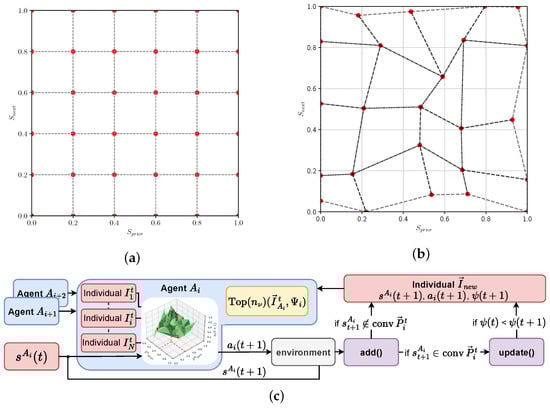
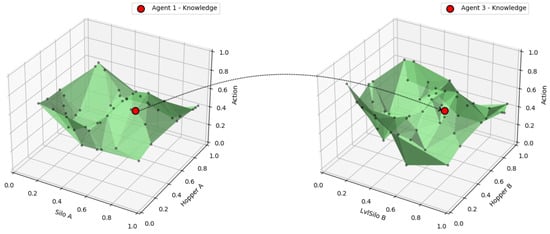
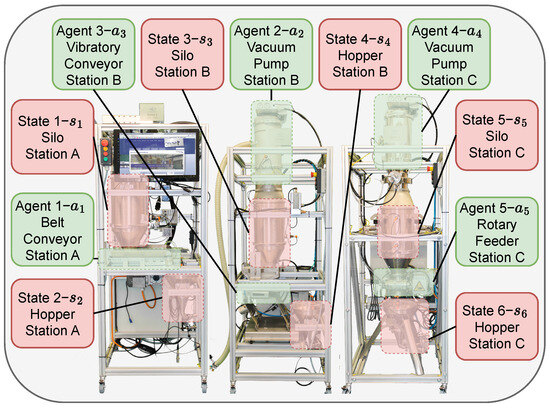
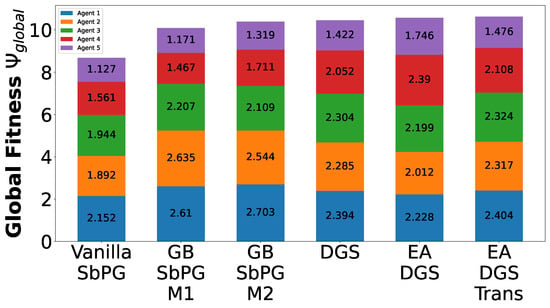
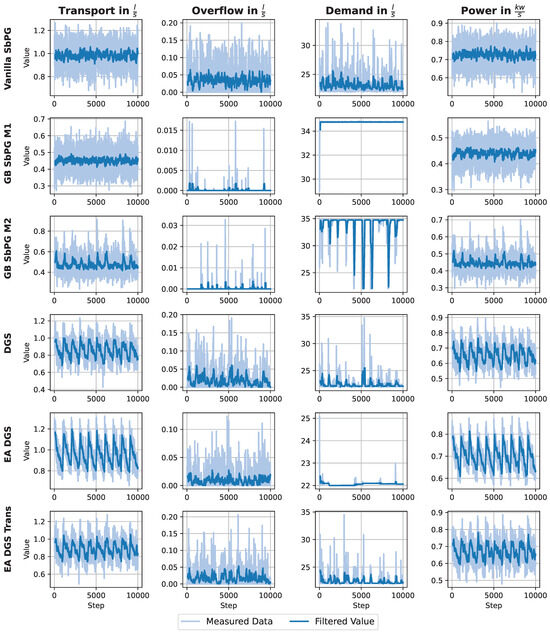
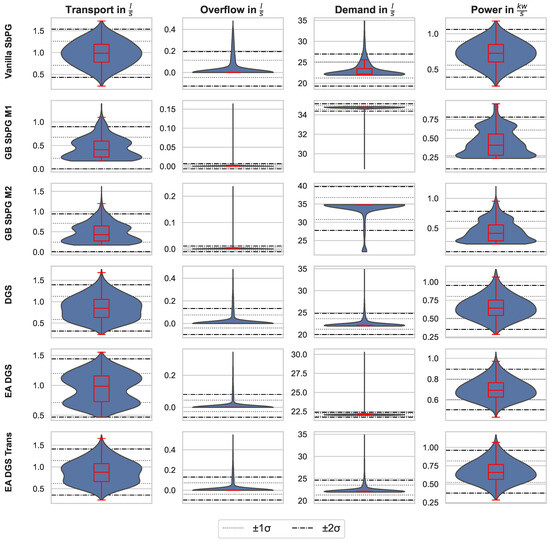
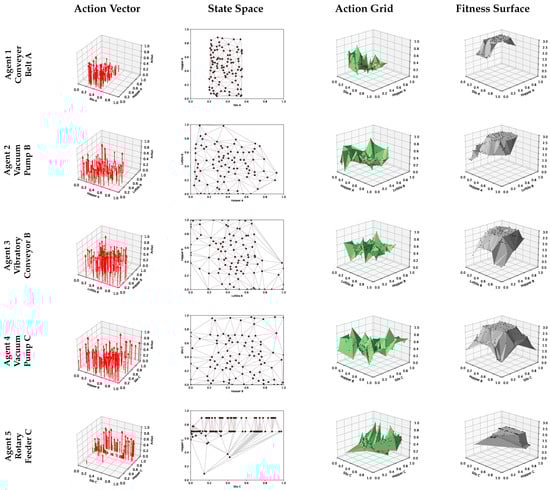
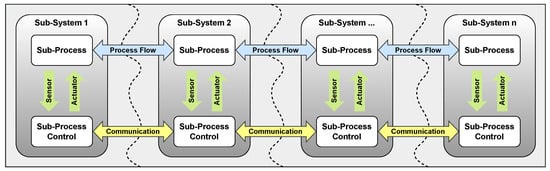
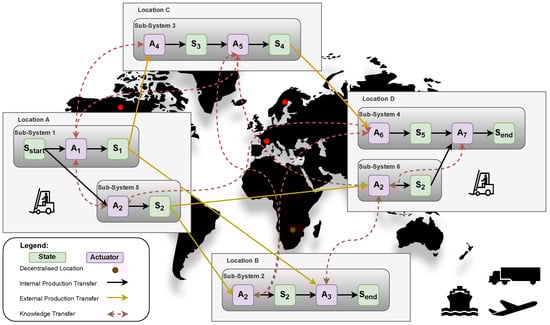
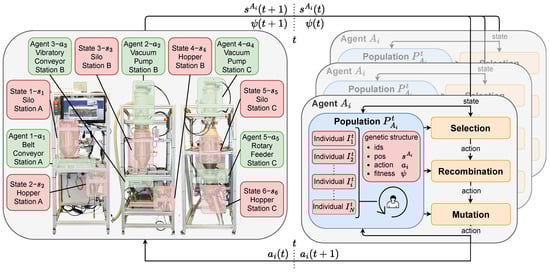
Distributed production systems have to increasingly balance economic goals such as energy efficiency and productivity with critical technical requirements such as flexibility, real-time capability, and reliability. This paper presents a novel approach for distributed optimization by means of Evolutionary State-based Potential Games with dynamic grid structures. More in detail, we leverage the combination of Potential Games which provide rigorous convergence guarantees with population-based optimization to improve the efficiency of the learning process. Specifically, we address challenges of previous approaches including inefficient best response strategies, insufficient coverage of the state–action space and the lack of knowledge transfer among agents. The developed strategies are evaluated on a industrial system of laboratory scale. The results highlight advances in evolutionary state-based knowledge transfer and an improved coverage resulting in efficient control policies. By leveraging dynamic grid structures, Evolutionary State-based Potential Games enable the maximization of weighted production targets while simultaneously eliminating process losses resulting in improvements in the considered metrics compared to state-of-the-art methods.
Full article
(This article belongs to the Special Issue Responsible AI: Alignment, Decentralization, and Optimization in Multi-Agent Systems Across Dynamic Environments)
►
Show Figures
Open AccessArticle
Edge-Ready Romanian Language Models: Training, Quantization, and Deployment
by
T. A. Diac, P. F. de Viana, A. F. Neagoe, A. Oprea, M. C. Raportaru and A. Nicolin-Żaczek
AI 2026, 7(2), 61; https://doi.org/10.3390/ai7020061 - 6 Feb 2026
Abstract
We present RoBaseLM-S (125 M) and RoBaseLM-M (260 M), two compact Romanian decoder-only language models trained from scratch on a 4.3 B-token curated corpus. Architecturally, they follow a modern LLaMA-style recipe with pre-norm RMSNorm, rotary position embeddings, SwiGLU feed-forward blocks, grouped-query attention, and
[...] Read more.
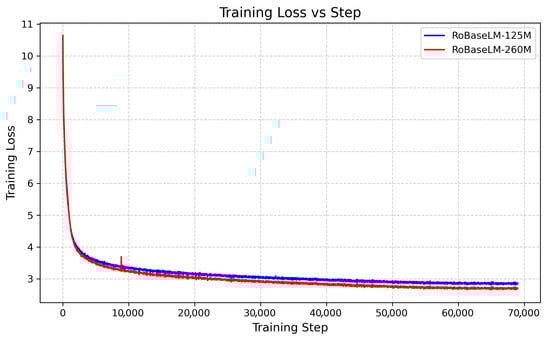
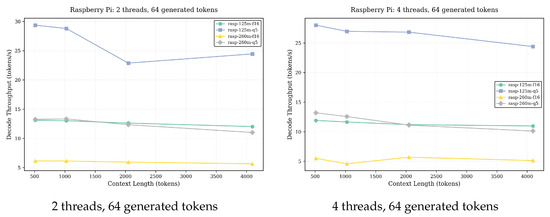
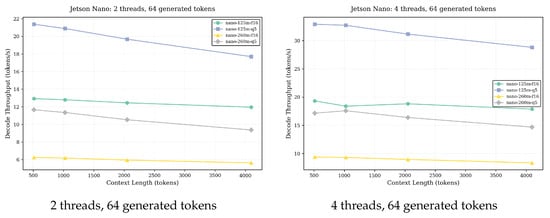
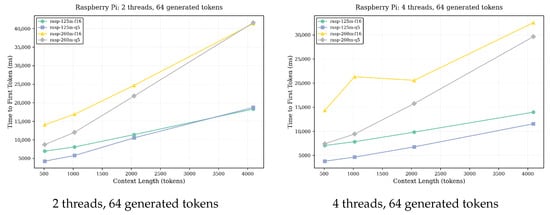
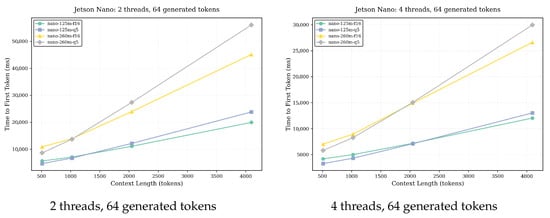
We present RoBaseLM-S (125 M) and RoBaseLM-M (260 M), two compact Romanian decoder-only language models trained from scratch on a 4.3 B-token curated corpus. Architecturally, they follow a modern LLaMA-style recipe with pre-norm RMSNorm, rotary position embeddings, SwiGLU feed-forward blocks, grouped-query attention, and 4 k-token context windows. We release both full-precision (FP16) and post-training 5-bit (Q5_K_M) checkpoints in GGUF format for lightweight local inference. The 5-bit variants fit under 500 MB and generate text in real time on a Jetson Nano 4 GB, enabling fully offline Romanian text generation on consumer-grade edge hardware. We evaluate the models intrinsically (multi-domain perplexity across news, literary prose, poetry, and heterogeneous web text) and extrinsically (LaRoSeDa sentiment classification and RO-STS sentence similarity). Relative to Romanian GPT-2–style baselines at similar parameter scales, RoBaseLM-S and RoBaseLM-M reduce perplexity substantially, e.g., from 30.7 to 15.9 on our held-out news split. The 5-bit post-training quantized checkpoints remain within FP16 performance across all reported tasks. To our knowledge, these are the first Romanian small language models explicitly optimized for long-context inference, post-training quantization, and low-power on-device deployment.
Full article
(This article belongs to the Topic Challenges and Solutions in Large Language Models)
►▼
Show Figures

Figure 1

Open AccessArticle
LFTD: Transformer-Enhanced Diffusion Model for Realistic Financial Time-Series Data Generation
by
Gyumun Choi, Donghyeon Jo, Wonho Song, Hyungjong Na and Hyungjoon Kim
AI 2026, 7(2), 60; https://doi.org/10.3390/ai7020060 - 5 Feb 2026
Abstract
Firm-level financial statement data form multivariate annual time series with strong cross-variable dependencies and temporal dynamics, yet publicly available panels are often short and incomplete, limiting the generalization of predictive models. We present Latent Financial Time-Series Diffusion (LFTD), a structure-aware augmentation framework that
[...] Read more.
Firm-level financial statement data form multivariate annual time series with strong cross-variable dependencies and temporal dynamics, yet publicly available panels are often short and incomplete, limiting the generalization of predictive models. We present Latent Financial Time-Series Diffusion (LFTD), a structure-aware augmentation framework that synthesizes realistic firm-level financial time series in a compact latent space. LFTD first learns information-preserving representations with a dual encoder: an FT-Transformer that captures within-year interactions across financial variables and a Time Series Transformer (TST) that models long-horizon evolution across years. On this latent sequence, we train a Transformer-based denoising diffusion model whose reverse process is FiLM-conditioned on the diffusion step as well as year, firm identity, and firm age, enabling controllable generation aligned with firm- and time-specific context. A TST-based Cross-Decoder then reconstructs continuous and binary financial variables for each year. Empirical evaluation on Korean listed-firm data from 2011 to 2023 shows that augmenting training sets with LFTD-generated samples consistently improves firm-value prediction for market-to-book and Tobin’s Q under both static (same-year) and dynamic (τ → τ + 1) forecasting settings and outperforms conventional generative augmentation baselines and ablated variants. These results suggest that domain-conditioned latent diffusion is a practical route to reliable augmentation for firm-level financial time series.
Full article
(This article belongs to the Topic Artificial Intelligence Applications in Financial Technology, 2nd Edition)
Open AccessArticle
A Multisite Study of an Animated Cinematic Clinical Narrative for Anticoagulant Pharmacology Education
by
Amanda Lee, Kyle DeWitt, Meize Guo and Tyler Bland
AI 2026, 7(2), 59; https://doi.org/10.3390/ai7020059 - 5 Feb 2026
Abstract
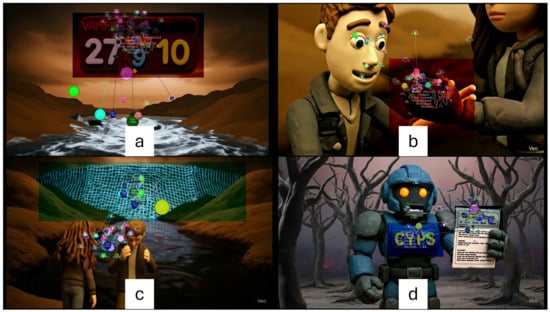
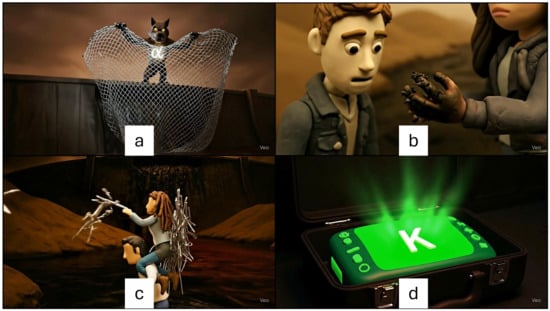
Anticoagulant pharmacology is a cognitively demanding domain in undergraduate medical education, with persistent challenges in learner engagement, retention, and safe clinical application. Cinematic Clinical Narratives (CCNs) offer a theory-informed multimedia approach designed to support learning through narrative structure, visual mnemonics, and affective engagement.
[...] Read more.
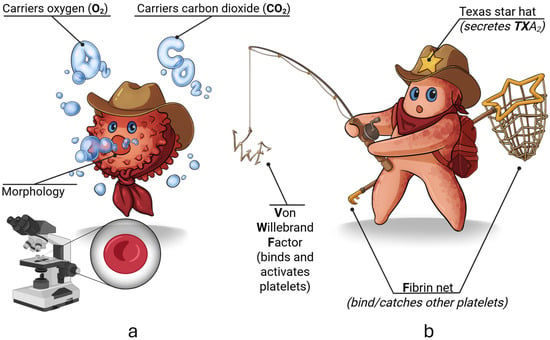
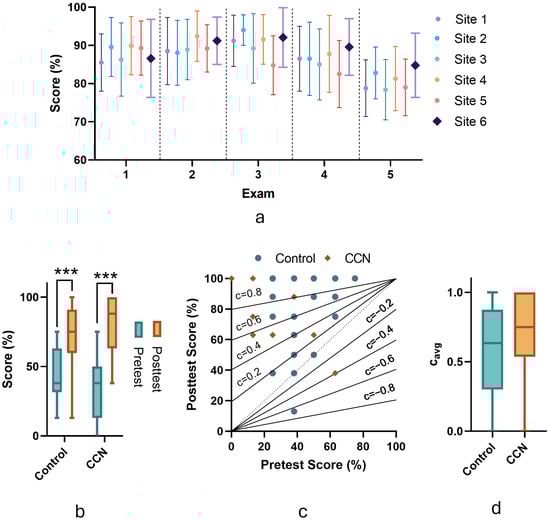
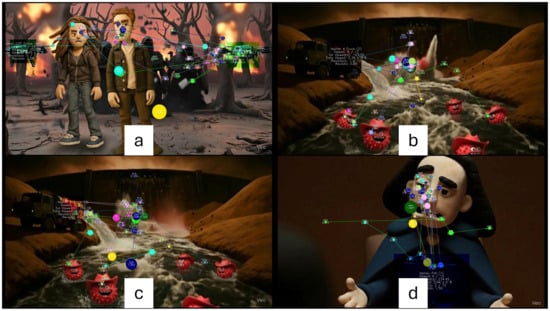
Anticoagulant pharmacology is a cognitively demanding domain in undergraduate medical education, with persistent challenges in learner engagement, retention, and safe clinical application. Cinematic Clinical Narratives (CCNs) offer a theory-informed multimedia approach designed to support learning through narrative structure, visual mnemonics, and affective engagement. We conducted a multi-site quasi-experimental study within a six-week Cancer, Hormones, and Blood course across a distributed medical education program. First-year medical students received either a traditional case-based lecture or an animated CCN (Twilight: Breaking Clots) during a one-hour anticoagulant pharmacology session. Learning outcomes were assessed using pre- and posttests, learner engagement was measured with the Situational Interest Survey for Multimedia (SIS-M), and exploratory eye tracking with second-year medical students was used to assess visual attention to embedded mnemonics. Both instructional groups demonstrated significant learning gains, with fold-change analyses indicating greater relative improvement among students exposed to the CCN. The animated CCN elicited significantly higher triggered situational interest compared with non-animated cases (p = 0.019), while also being preferred by the majority of participants. Qualitative analysis revealed that learners perceived CCNs as particularly effective for initial encoding and memorization, while non-animated cases supported subsequent clinical application. Eye-tracking data demonstrated high visual uptake and sustained attention to key mnemonic elements. Together, these findings support expert-designed, genAI-assisted CCNs as a validated and complementary instructional approach in medical education.
Full article
(This article belongs to the Special Issue How Is AI Transforming Education?)
►▼
Show Figures

Figure 1
Open AccessReview
Advances in Audio-Based Artificial Intelligence for Respiratory Health and Welfare Monitoring in Broiler Chickens
by
Md Sharifuzzaman, Hong-Seok Mun, Eddiemar B. Lagua, Md Kamrul Hasan, Jin-Gu Kang, Young-Hwa Kim, Ahsan Mehtab, Hae-Rang Park and Chul-Ju Yang
AI 2026, 7(2), 58; https://doi.org/10.3390/ai7020058 - 4 Feb 2026
Abstract
Respiratory diseases and welfare impairments impose substantial economic and ethical burdens on modern broiler production, driven by high stocking density, rapid pathogen transmission, and limited sensitivity of conventional monitoring methods. Because respiratory pathology and stress directly alter vocal behavior, acoustic monitoring has emerged
[...] Read more.
Respiratory diseases and welfare impairments impose substantial economic and ethical burdens on modern broiler production, driven by high stocking density, rapid pathogen transmission, and limited sensitivity of conventional monitoring methods. Because respiratory pathology and stress directly alter vocal behavior, acoustic monitoring has emerged as a promising non-invasive approach for continuous flock-level surveillance. This review synthesizes recent advances in audio classification and artificial intelligence for monitoring respiratory health and welfare in broiler chickens. We have reviewed the anatomical basis of sound production, characterized key vocal categories relevant to health and welfare, and summarized recording strategies, datasets, acoustic features, machine-learning and deep-learning models, and evaluation metrics used in poultry sound analysis. Evidence from experimental and commercial settings demonstrates that AI-based acoustic systems can detect respiratory sounds, stress, and welfare changes with high accuracy, often enabling earlier intervention than traditional methods. Finally, we discuss current limitations, including background noise, data imbalance, limited multi-farm validation, and challenges in interpretability and deployment, and outline future directions for scalable, robust, and practical sound-based monitoring systems in broiler production.
Full article
(This article belongs to the Section AI Systems: Theory and Applications)
Open AccessArticle
NornirNet: A Deep Learning Framework to Distinguish Benign from Malignant Type II Endoleaks After Endovascular Aortic Aneurysm Repair Using Preoperative Imaging
by
Francesco Andreoli, Fabio Mattiussi, Elias Wasseh, Andrea Leoncini, Ludovica Ettorre, Jacopo Galafassi, Maria Antonella Ruffino, Luca Giovannacci, Alessandro Robaldo and Giorgio Prouse
AI 2026, 7(2), 57; https://doi.org/10.3390/ai7020057 - 4 Feb 2026
Abstract
Background/Objectives: Type II endoleak (T2EL) remains the most frequent complication after endovascular aortic aneurysm repair (EVAR), with uncertain clinical relevance and management. While most resolve spontaneously, persistent T2ELs can lead to sac enlargement and rupture risk. This study proposes a deep learning framework
[...] Read more.
Background/Objectives: Type II endoleak (T2EL) remains the most frequent complication after endovascular aortic aneurysm repair (EVAR), with uncertain clinical relevance and management. While most resolve spontaneously, persistent T2ELs can lead to sac enlargement and rupture risk. This study proposes a deep learning framework for preoperative prediction of T2EL occurrence and severity using volumetric computed tomography angiography (CTA) data. Methods: A retrospective analysis of 277 patients undergoing standard EVAR (2010–2023) was performed. Preoperative CTA scans were processed for volumetric normalization and fed into a 3D convolutional neural network (CNN) trained to classify patients into three categories: no T2EL, benign T2EL, or malignant T2EL. The model was trained on 175 cases, validated on 72, and tested on an independent cohort of 30 patients. Performance metrics included accuracy, precision, recall, F1-score, and area under the receiver operating characteristic curve (AUC). Results: The CNN achieved an overall accuracy of 76.7% (95% CI: 0.63–0.90), a macro-averaged F1-score of 0.77, and an AUC of 0.93. Class-specific AUCs were 0.93 for no T2EL, 0.91 for benign, and 0.96 for malignant cases, confirming high discriminative capacity across outcomes. Most misclassifications occurred between adjacent categories. Conclusions: This study introduces the first end-to-end 3D CNN capable of predicting both the presence and severity of T2EL directly from preoperative CTA, without manual segmentation or handcrafted features. These findings suggest that preoperative imaging encodes latent structural information predictive of endoleak-driven sac reperfusion, potentially enabling personalized pre-emptive embolization strategies and tailored surveillance after EVAR.
Full article
(This article belongs to the Special Issue The Future of Image Processing: Leveraging Pattern Recognition and AI)
Open AccessArticle
An Adaptive Attention DropBlock Framework for Real-Time Cross-Domain Defect Classification
by
Shailaja Pasupuleti, Ramalakshmi Krishnamoorthy and Hemalatha Gunasekaran
AI 2026, 7(2), 56; https://doi.org/10.3390/ai7020056 - 3 Feb 2026
Abstract
The categorization of real-time defects in heterogeneous domains is a long-standing challenge in the field of industrial visual inspection systems, primarily due to significant visual variations and the lack of labelled information in real-world inspection settings. This work presents the Adaptive Attention DropBlock
[...] Read more.
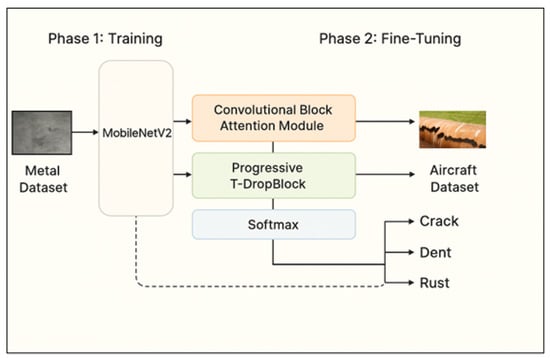
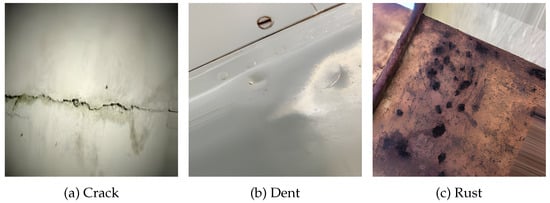
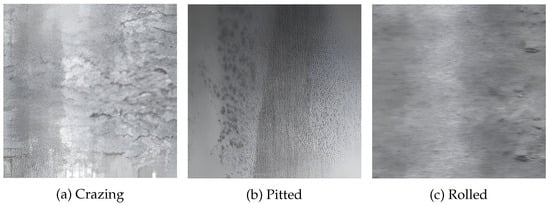
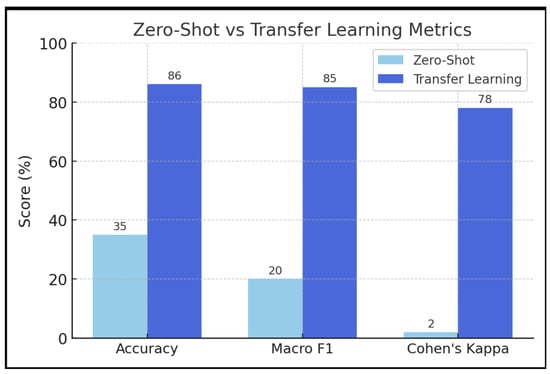
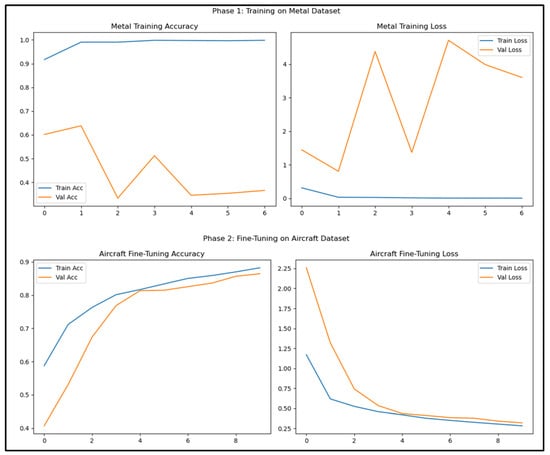
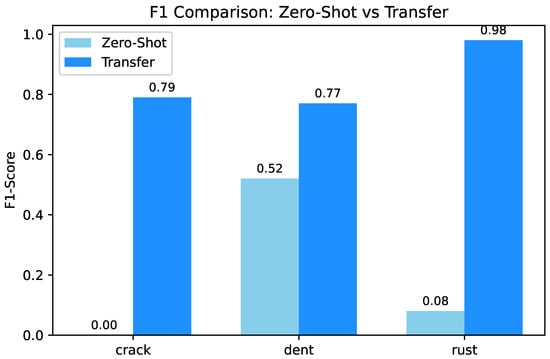
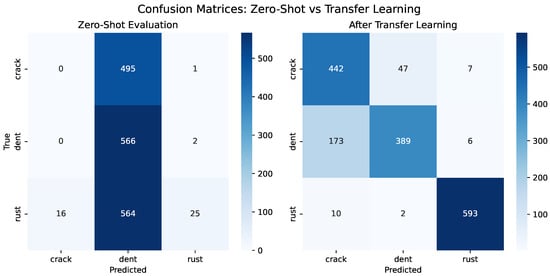
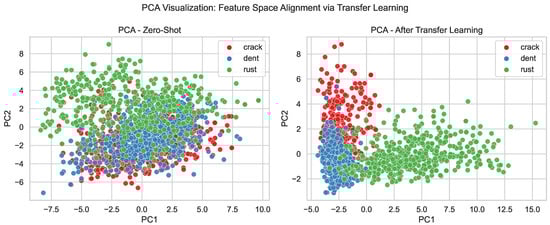
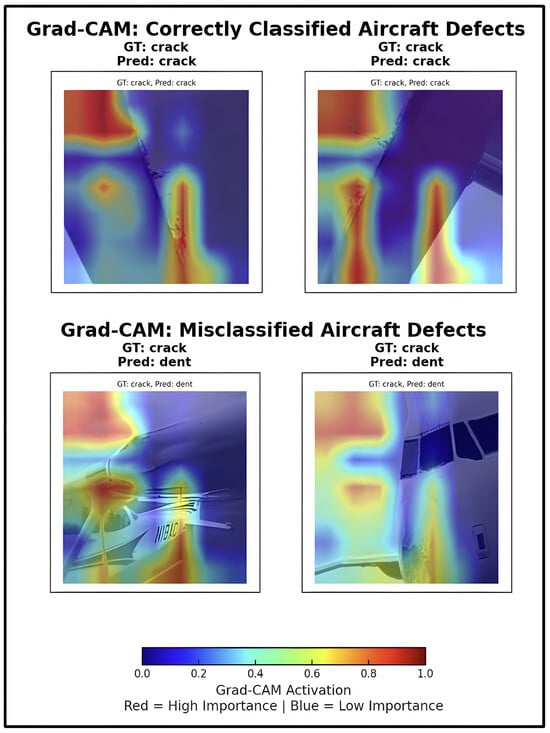
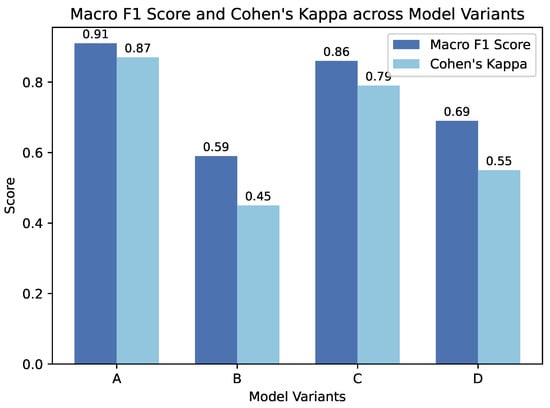
The categorization of real-time defects in heterogeneous domains is a long-standing challenge in the field of industrial visual inspection systems, primarily due to significant visual variations and the lack of labelled information in real-world inspection settings. This work presents the Adaptive Attention DropBlock (AADB) framework, a lightweight deep learning framework that was developed to promote cross-domain defect detection using attention-guided regularization. The proposed architecture integrates the Convolutional Block Attention Module (CBAM) and an organized DropBlock-based regularization scheme, creating a unified and robust framework. Although CBAM-based approaches improve localization of defect-related areas and traditional DropBlock provides a generic spatial regularization, neither of them alone is specifically designed to reduce domain overfitting. To address this limitation, AADB combines attention-directed feature refinement with a progressive, transfer-aware dropout policy that promotes the learning of domain-invariant representations. The proposed model is built on a MobileNetV2 base and trained through a two-phase transfer learning regime, where the first phase consists of pretraining on a source domain and the second phase consists of adaptation to a visually dissimilar target domain with constrained supervision. The overall analysis of a metal surface defect dataset (source domain) and an aircraft surface defect dataset (target domain) shows that AADB outperforms CBAM-only, DropBlock-only, and conventional MobileNetV2 models, with an overall accuracy of 91.06%, a macro-F1 of 0.912, and a Cohen’s k of 0.866. Improved feature separability and localization of error are further described by qualitative analyses using Principal Component Analysis (PCA) and Grad-CAM. Overall, the framework provides a practical, interpretable, and edge-deployable solution to the classification of cross-domain defects in the industrial inspection setting.
Full article
(This article belongs to the Topic AI and Data-Driven Advancements in Industry 4.0, 2nd Edition)
►▼
Show Figures

Figure 1

Open AccessArticle
Machine Learning–Driven Optimization of Photovoltaic Systems on Uneven Terrain for Sustainable Energy Development
by
Luis Angel Iturralde Carrera, Carlos D. Constantino-Robles, Omar Rodríguez-Abreo, Carlos Fuentes-Silva, Gabriel Alejandro Cruz Reyes, Araceli Zapatero-Gutiérrez, Yoisdel Castillo Alvarez and Juvenal Rodríguez-Reséndiz
AI 2026, 7(2), 55; https://doi.org/10.3390/ai7020055 - 2 Feb 2026
Abstract
This study presents an AI-driven computational framework for optimizing the orientation and spatial deployment of photovoltaic (PV) systems installed on uneven terrain, with the objective of enhancing energy efficiency and supporting sustainable energy development. The proposed methodology integrates PVsyst-based numerical simulations with statistical
[...] Read more.
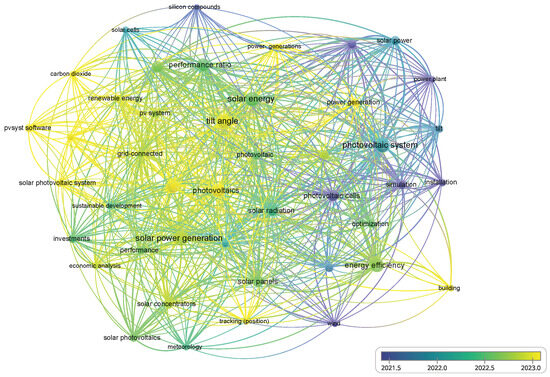
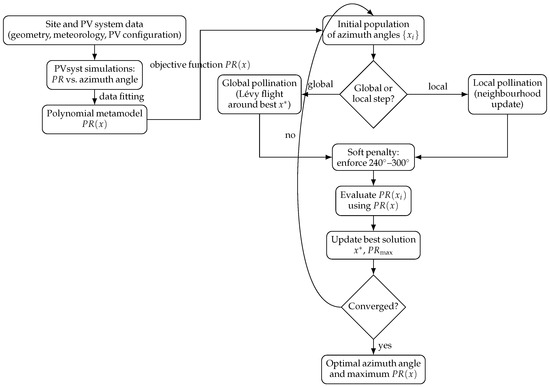
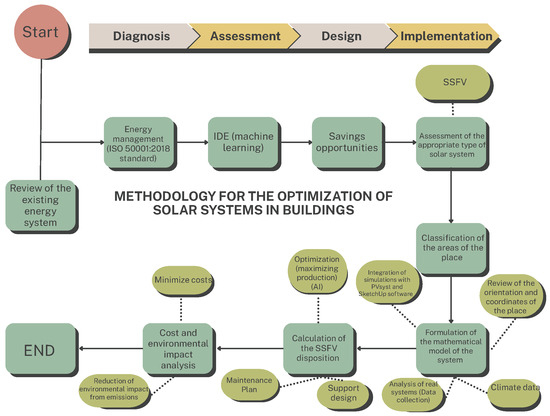
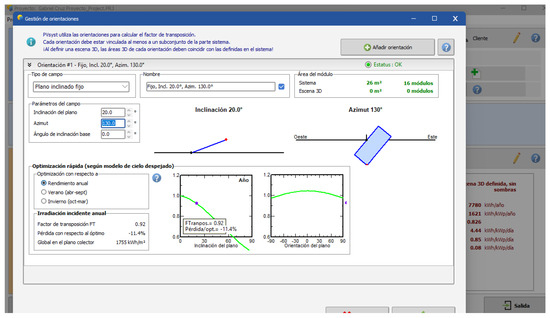
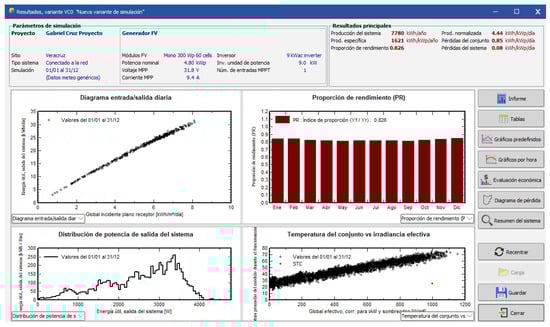
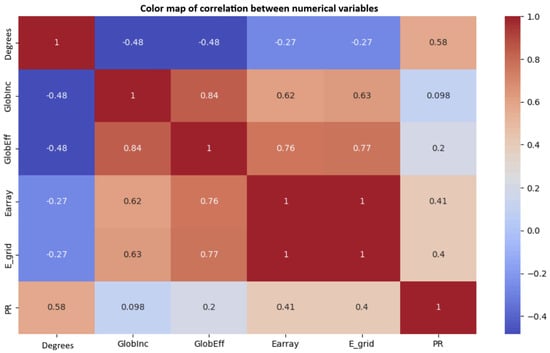
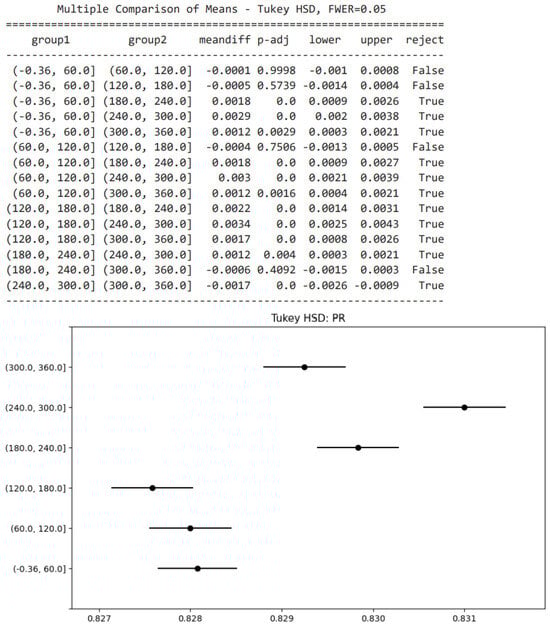
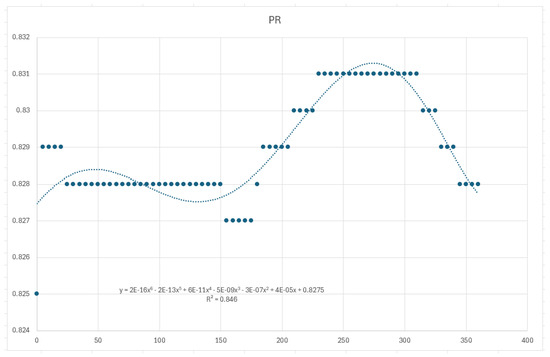
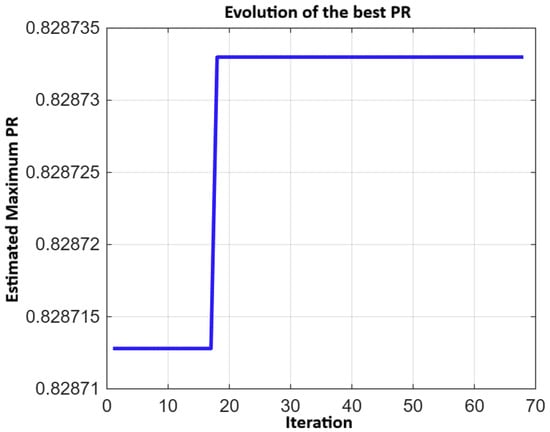
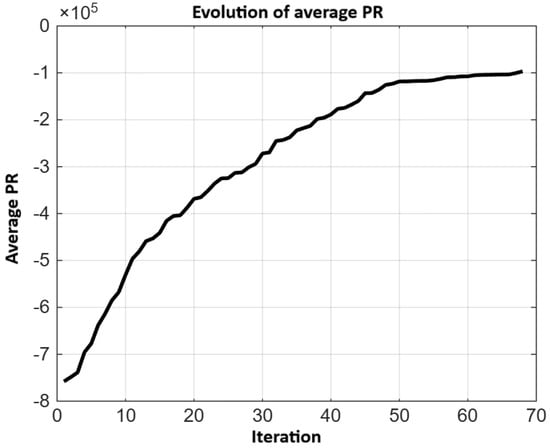
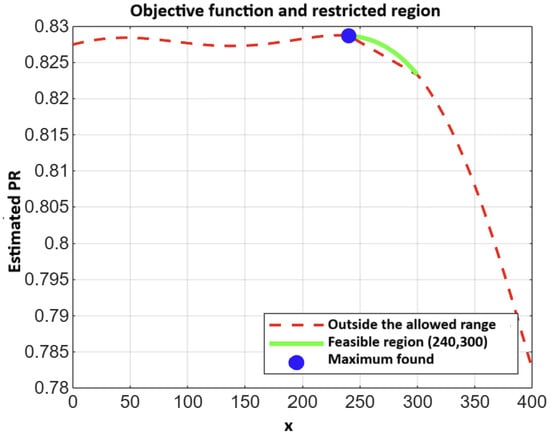
This study presents an AI-driven computational framework for optimizing the orientation and spatial deployment of photovoltaic (PV) systems installed on uneven terrain, with the objective of enhancing energy efficiency and supporting sustainable energy development. The proposed methodology integrates PVsyst-based numerical simulations with statistical modeling and bio-inspired heuristic optimization algorithms, forming a hybrid machine learning–assisted decision-making approach. A heuristic–parametric optimization strategy was employed to evaluate multiple tilt and azimuth configurations, aiming to maximize specific energy yield and overall system performance, expressed through the performance ratio (PR). The model was validated using site-specific climatic data from Veracruz, Mexico, and identified an optimal azimuth orientation of approximately 267.3°, corresponding to an estimated PR of 0.8318. The results highlight the critical influence of azimuth orientation on photovoltaic efficiency and demonstrate strong consistency between simulation outputs, statistical analysis, and intelligent optimization results. From an industrial perspective, the proposed framework reduces planning uncertainty and energy losses associated with suboptimal configurations, enabling more reliable and cost-effective photovoltaic system design, particularly for installations on uneven terrain. Moreover, the methodology significantly reduces planning time and potential installation costs by eliminating the need for preliminary physical testing, offering a scalable and reproducible AI-assisted tool that can contribute to lower levelized energy costs, enhanced system reliability, and more efficient deployment of photovoltaic technologies in the renewable energy industry. Future work will extend the model toward a multivariable machine learning framework incorporating tilt angle, climatic variability, and photovoltaic technology type, further strengthening its applicability in real-world environments and its contribution to Sustainable Development Goal 7: affordable and clean energy.
Full article
(This article belongs to the Special Issue The Application of Machine Learning and AI Technology Towards the Sustainable Development Goals)
►▼
Show Figures

Figure 1

Open AccessArticle
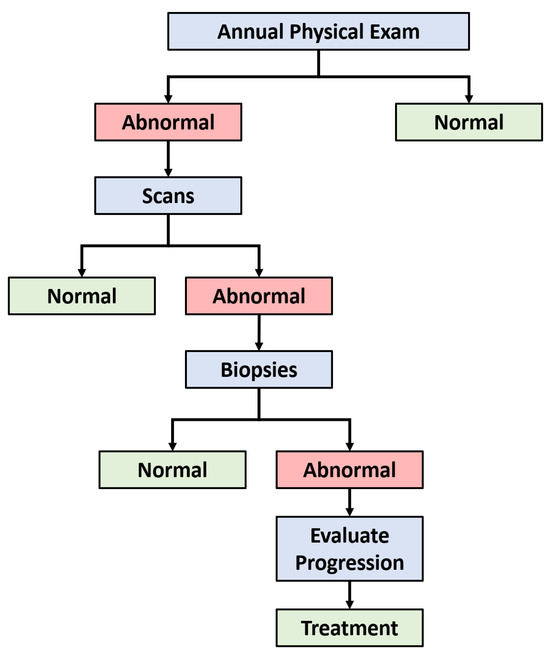
A Novel Recurrent Neural Network Framework for Prediction and Treatment of Oncogenic Mutation Progression
by
Rishab Parthasarathy and Achintya K. Bhowmik
AI 2026, 7(2), 54; https://doi.org/10.3390/ai7020054 - 2 Feb 2026
Abstract
Despite significant medical advancements, cancer remains the second leading cause of death in the US, causing over 600,000 deaths per year. One emerging field, pathway analysis, is promising but still relies on manually derived wet lab data, which is time-consuming to acquire. This
[...] Read more.
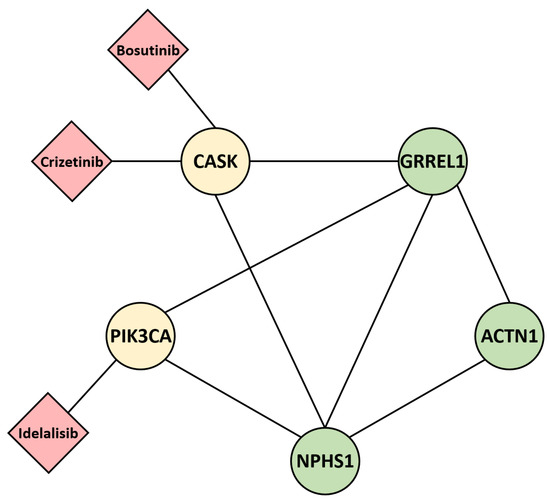
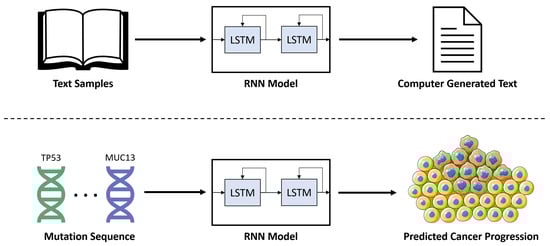
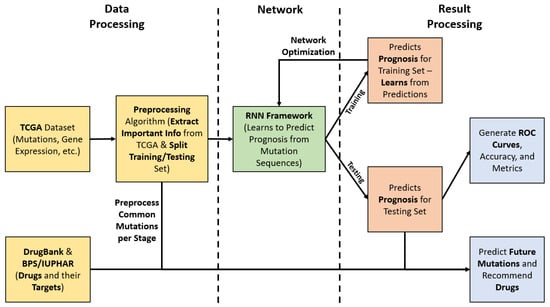
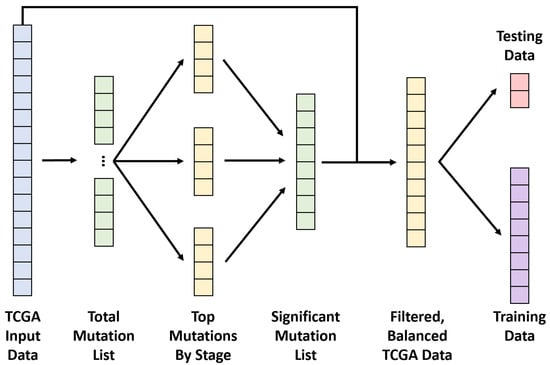
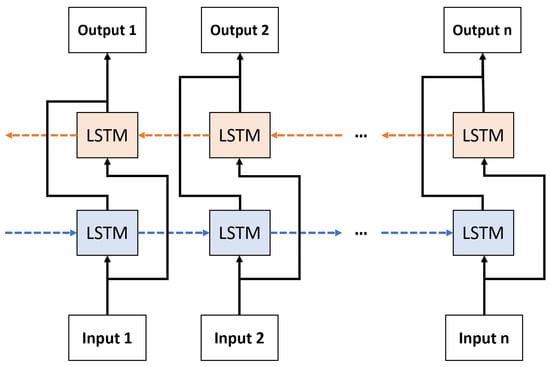
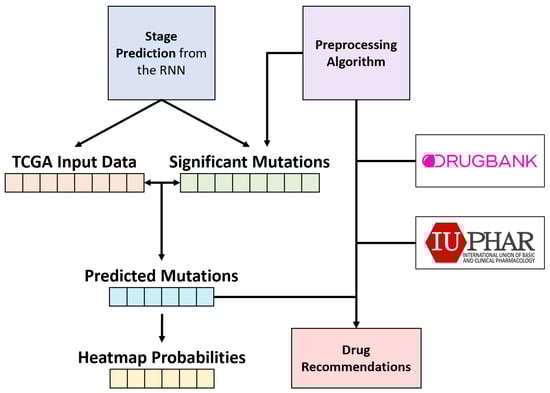
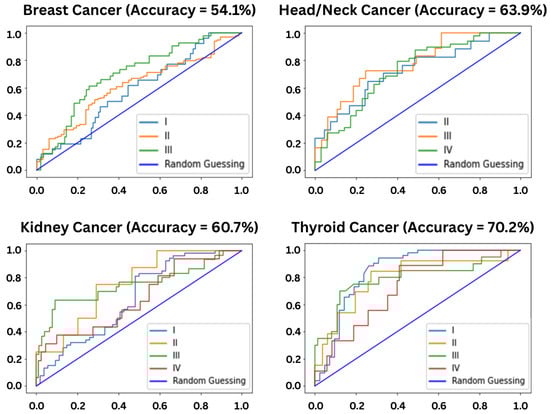
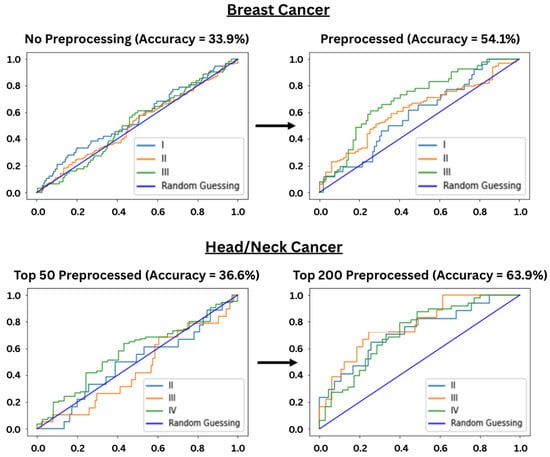
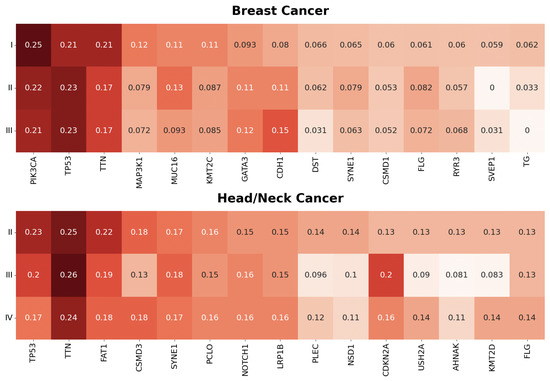
Despite significant medical advancements, cancer remains the second leading cause of death in the US, causing over 600,000 deaths per year. One emerging field, pathway analysis, is promising but still relies on manually derived wet lab data, which is time-consuming to acquire. This work proposes an efficient, effective, end-to-end framework for Artificial Intelligence (AI)-based pathway analysis that predicts both cancer severity and mutation progression in order to recommend possible treatments. The proposed technique involves a novel combination of time-series machine learning models and pathway analysis. First, mutation sequences were isolated from The Cancer Genome Atlas (TCGA) Database. Then, a novel preprocessing algorithm was used to filter key mutations by mutation frequency. This data was fed into a Recurrent Neural Network (RNN) that predicted cancer severity. The model probabilistically used the RNN predictions, information from the preprocessing algorithm, and multiple drug-target databases to predict future mutations and recommend possible treatments. This framework achieved robust results and Receiver Operating Characteristic (ROC) curves (a key statistical metric) with accuracies greater than 60%, similar to existing cancer diagnostics. In addition, preprocessing played a key role in isolating a few hundred key driver mutations per cancer stage, consistent with current research. Heatmaps based on predicted gene frequency were also generated, highlighting key mutations in each cancer. Overall, this work is the first to propose an efficient, cost-effective end-to-end framework for projecting cancer prognosis and providing possible treatments without relying on expensive, time-consuming wet lab work.
Full article
(This article belongs to the Special Issue Transforming Biomedical Innovation with Artificial Intelligence)
►▼
Show Figures

Figure 1

Open AccessArticle
Integrating Explainable AI (XAI) and NCA-Validated Clustering for an Interpretable Multi-Layered Recruitment Model
by
Marcin Nowak and Marta Pawłowska-Nowak
AI 2026, 7(2), 53; https://doi.org/10.3390/ai7020053 - 2 Feb 2026
Abstract
►▼
Show Figures
The growing use of AI-supported recruitment systems raises concerns related to model opacity, auditability, and ethically sensitive decision-making, despite their predictive potential. In human resource management, there is a clear need for recruitment solutions that combine analytical effectiveness with transparent and explainable decision
[...] Read more.
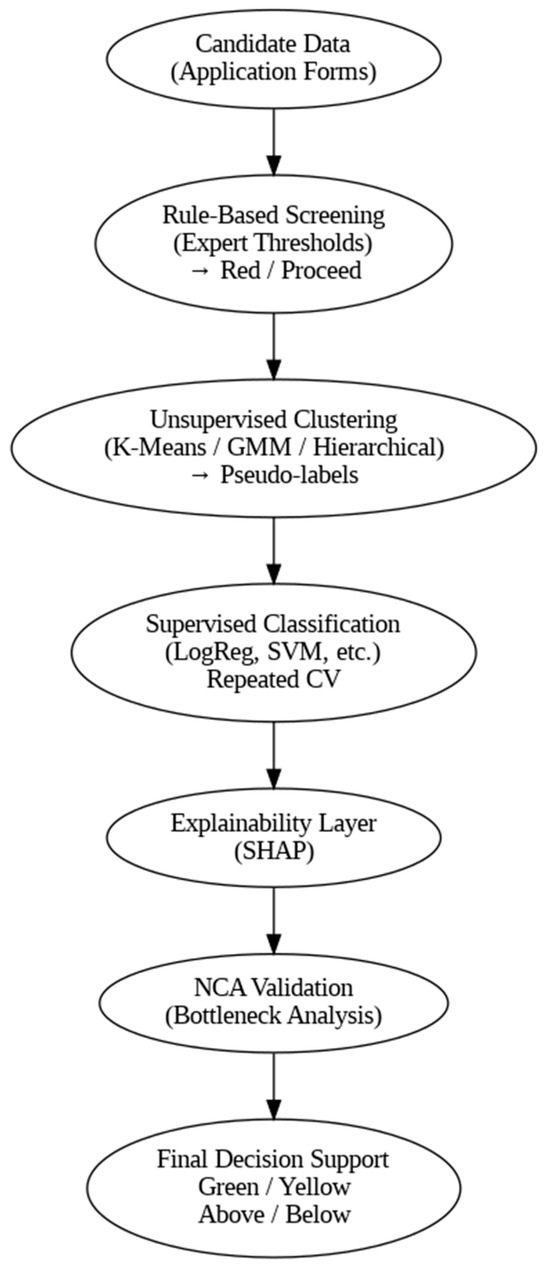
The growing use of AI-supported recruitment systems raises concerns related to model opacity, auditability, and ethically sensitive decision-making, despite their predictive potential. In human resource management, there is a clear need for recruitment solutions that combine analytical effectiveness with transparent and explainable decision support. Existing approaches often lack coherent, multi-layered architectures integrating expert knowledge, machine learning, and interpretability within a single framework. This article proposes an interpretable, multi-layered recruitment model designed to balance predictive performance with decision transparency. The framework integrates an expert rule-based screening layer, an unsupervised clustering layer for structuring candidate profiles and generating pseudo-labels, and a supervised classification layer trained using repeated k-fold cross-validation. Model behavior is explained using SHAP, while Necessary Condition Analysis (NCA) is applied to diagnose minimum competency thresholds required to achieve a target quality level. The approach is demonstrated in a Data Scientist recruitment case study. Results show the predominance of centroid-based clustering and the high stability of linear classifiers, particularly logistic regression. The proposed framework is replicable and supports transparent, auditable recruitment decisions.
Full article

Figure 1
Open AccessArticle
Enhancing Decision Intelligence Using Hybrid Machine Learning Framework with Linear Programming for Enterprise Project Selection and Portfolio Optimization
by
Abdullah, Nida Hafeez, Carlos Guzmán Sánchez-Mejorada, Miguel Jesús Torres Ruiz, Rolando Quintero Téllez, Eponon Anvi Alex, Grigori Sidorov and Alexander Gelbukh
AI 2026, 7(2), 52; https://doi.org/10.3390/ai7020052 - 1 Feb 2026
Abstract
►▼
Show Figures
This study presents a hybrid analytical framework that enhances project selection by achieving reasonable predictive accuracy through the integration of expert judgment and modern artificial intelligence (AI) techniques. Using an enterprise-level dataset of 10,000 completed software projects with verified real-world statistical characteristics, we
[...] Read more.
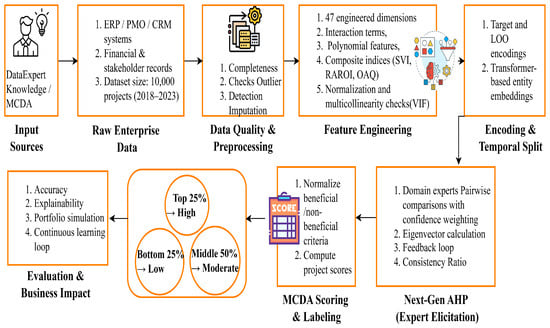
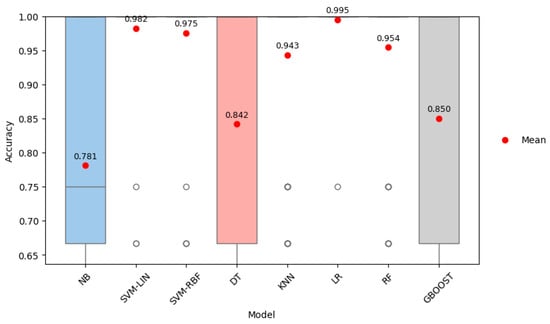
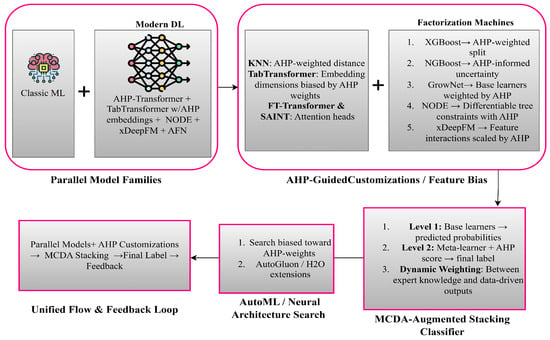
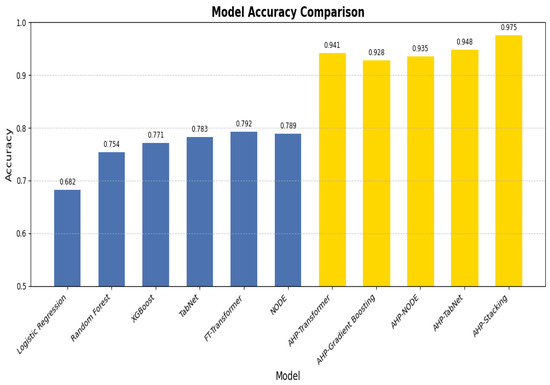
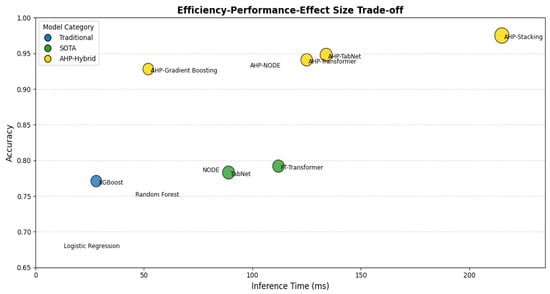
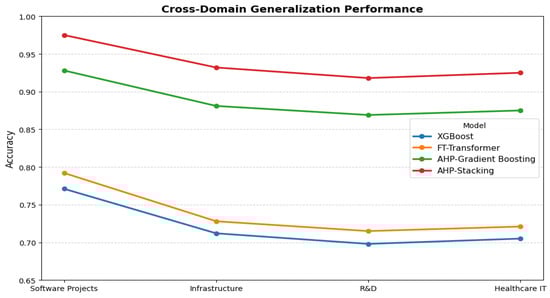
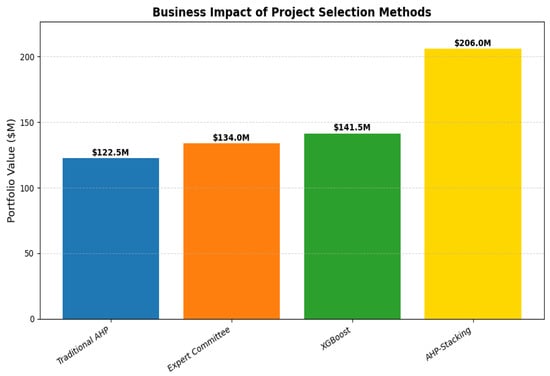
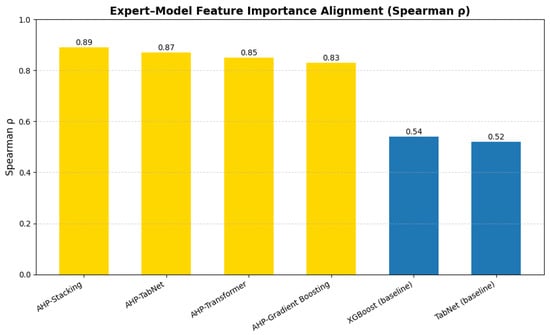
This study presents a hybrid analytical framework that enhances project selection by achieving reasonable predictive accuracy through the integration of expert judgment and modern artificial intelligence (AI) techniques. Using an enterprise-level dataset of 10,000 completed software projects with verified real-world statistical characteristics, we develop a three-step architecture for intelligent decision support. First, we introduce an extended Analytic Hierarchy Process (AHP) that incorporates organizational learning patterns to compute expert-validated criteria weights with a consistent level of reliability ( ), and Linear Programming is used for portfolio optimization. Second, we propose a machine learning architecture that integrates expert knowledge derived from AHP into models such as Transformers, TabNet, and Neural Oblivious Decision Ensembles through mechanisms including attention modulation, split criterion weighting, and differentiable tree regularization. Third, the hybrid AHP-Stacking classifier generates a meta-ensemble that adaptively balances expert-derived information with data-driven patterns. The analysis shows that the model achieves 97.5% accuracy, a 96.9% F1-score, and a 0.989 AUC-ROC, representing a 25% improvement compared to baseline methods. The framework also indicates a projected 68.2% improvement in portfolio value (estimated incremental value of USD 83.5 M) based on post factum financial results from the enterprise’s ventures.This study is evaluated retrospectively using data from a single enterprise, and while the results demonstrate strong robustness, generalizability to other organizational contexts requires further validation. This research contributes a structured approach to hybrid intelligent systems and demonstrates that combining expert knowledge with machine learning can provide reliable, transparent, and high-performing decision-support capabilities for project portfolio management.
Full article

Figure 1
Open AccessArticle
Hybrid AI and LLM-Enabled Agent-Based Real-Time Decision Support Architecture for Industrial Batch Processes: A Clean-in-Place Case Study
by
Apolinar González-Potes, Diego Martínez-Castro, Carlos M. Paredes, Alberto Ochoa-Brust, Luis J. Mena, Rafael Martínez-Peláez, Vanessa G. Félix and Ramón A. Félix-Cuadras
AI 2026, 7(2), 51; https://doi.org/10.3390/ai7020051 - 1 Feb 2026
Abstract
A hybrid AI and LLM-enabled architecture is presented for real-time decision support in industrial batch processes, where supervision still relies heavily on human operators and ad hoc SCADA logic. Unlike algorithmic contributions proposing novel AI methods, this work addresses the practical integration and
[...] Read more.
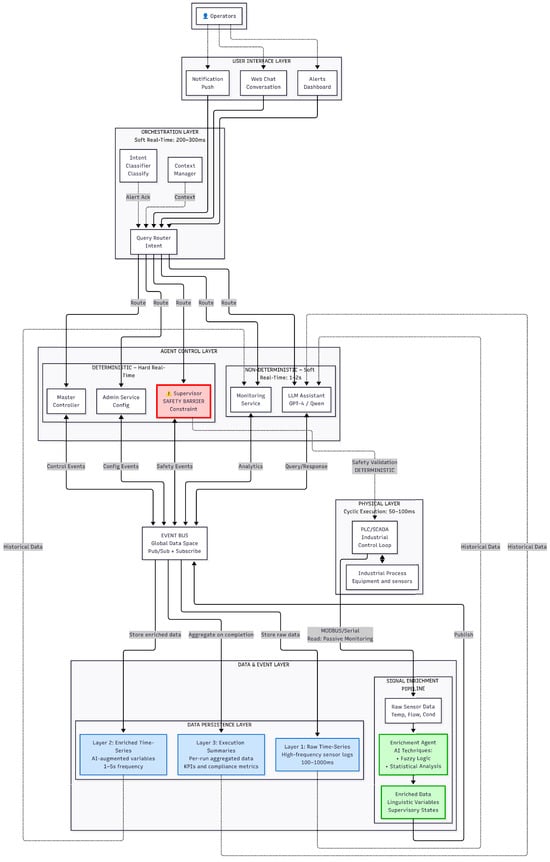
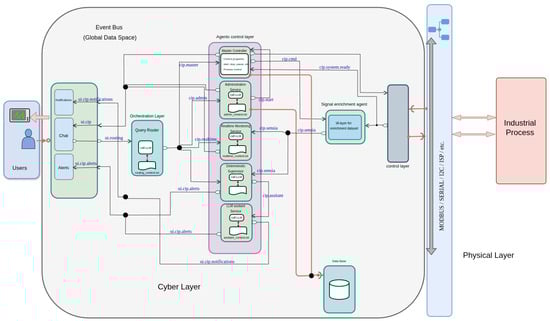
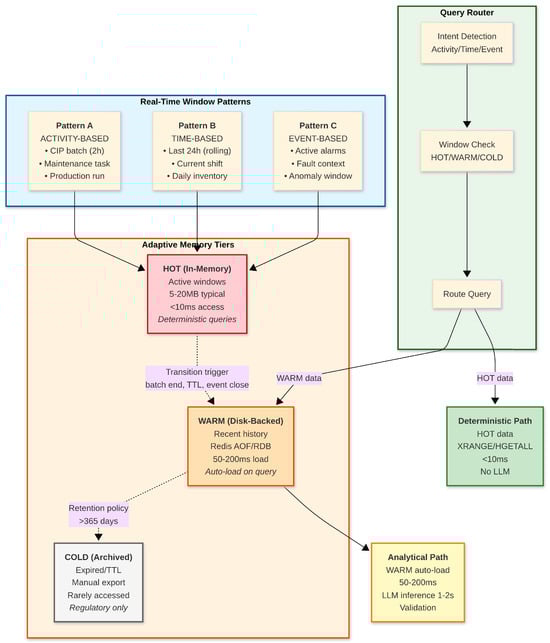
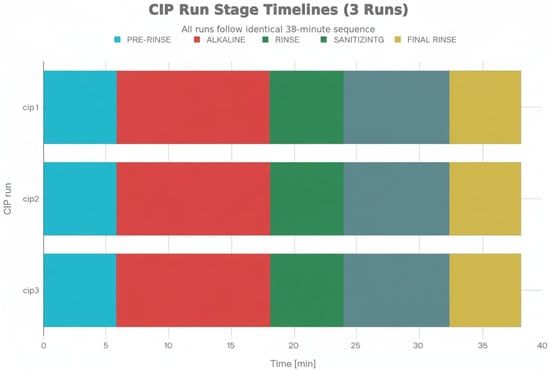
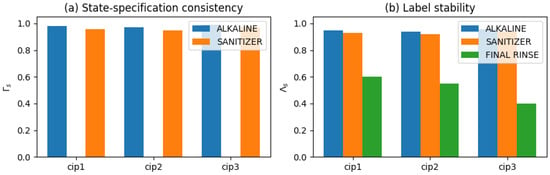
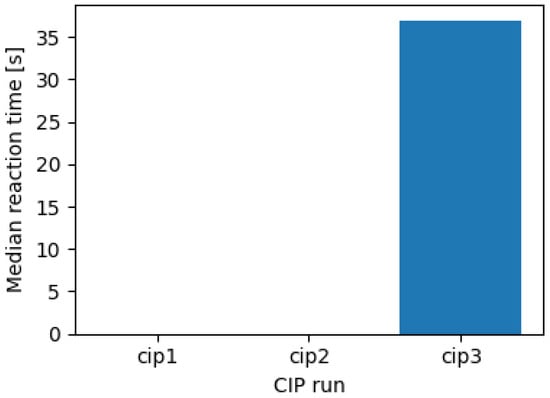
A hybrid AI and LLM-enabled architecture is presented for real-time decision support in industrial batch processes, where supervision still relies heavily on human operators and ad hoc SCADA logic. Unlike algorithmic contributions proposing novel AI methods, this work addresses the practical integration and deployment challenges arising when applying existing AI techniques to safety-critical industrial environments with legacy PLC/SCADA infrastructure and real-time constraints. The framework combines deterministic rule-based agents, fuzzy and statistical enrichment, and large language models (LLMs) to support monitoring, diagnostic interpretation, preventive maintenance planning, and operator interaction with minimal manual intervention. High-frequency sensor streams are collected into rolling buffers per active process instance; deterministic agents compute enriched variables, discrete supervisory states, and rule-based alarms, while an LLM-driven analytics agent answers free-form operator queries over the same enriched datasets through a conversational interface. The architecture is instantiated and deployed in the Clean-in-Place (CIP) system of an industrial beverage plant and evaluated following a case study design aimed at demonstrating architectural feasibility and diagnostic behavior under realistic operating regimes rather than statistical generalization. Three representative multi-stage CIP executions—purposively selected from 24 runs monitored during a six-month deployment—span nominal baseline, preventive-warning, and diagnostic-alert conditions. The study quantifies stage-specification compliance, state-to-specification consistency, and temporal stability of supervisory states, and performs spot-check audits of numerical consistency between language-based summaries and enriched logs. Results in the evaluated CIP deployment show high time within specification in sanitizing stages (100% compliance across the evaluated runs), coherent and mostly stable supervisory states in variable alkaline conditions (state-specification consistency ), and data-grounded conversational diagnostics in real time (median numerical error below 3% in audited samples), without altering the existing CIP control logic. These findings suggest that the architecture can be transferred to other industrial cleaning and batch operations by reconfiguring process-specific rules and ontologies, though empirical validation in other process types remains future work. The contribution lies in demonstrating how to bridge the gap between AI theory and industrial practice through careful system architecture, data transformation pipelines, and integration patterns that enable reliable AI-enhanced decision support in production environments, offering a practical path toward AI-assisted process supervision with explainable conversational interfaces that support preventive maintenance decision-making and equipment health monitoring.
Full article
(This article belongs to the Special Issue Artificial Intelligence in Industrial Systems: From Data Acquisition to Intelligent Decision-Making)
►▼
Show Figures

Figure 1
Open AccessReview
Efficient Feature Extraction for EEG-Based Classification: A Comparative Review of Deep Learning Models
by
Louisa Hallal, Jason Rhinelander, Ramesh Venkat and Aaron Newman
AI 2026, 7(2), 50; https://doi.org/10.3390/ai7020050 - 1 Feb 2026
Abstract
Feature extraction (FE) is an important step in electroencephalogram (EEG)-based classification for brain–computer interface (BCI) systems and neurocognitive monitoring. However, the dynamic and low-signal-to-noise nature of EEG data makes achieving robust FE challenging. Recent deep learning (DL) advances have offered alternatives to traditional
[...] Read more.
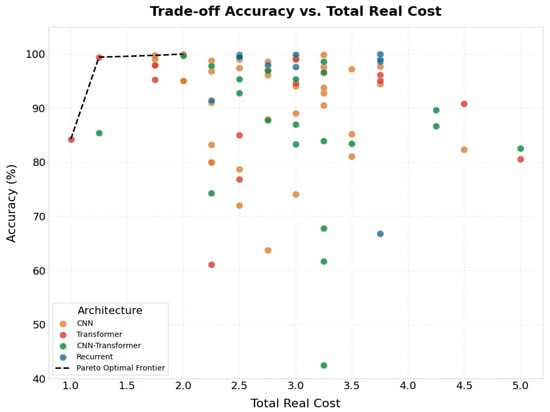
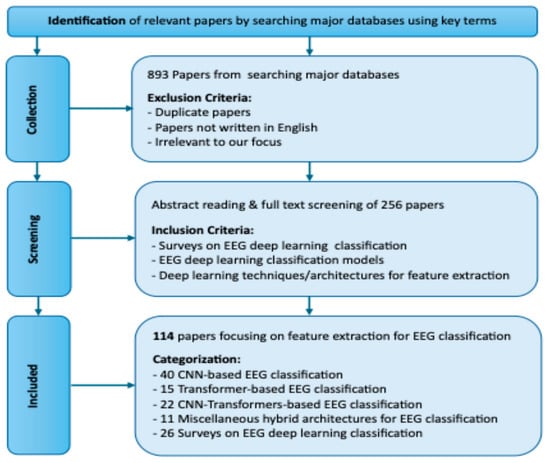
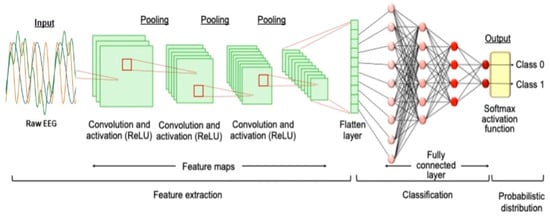
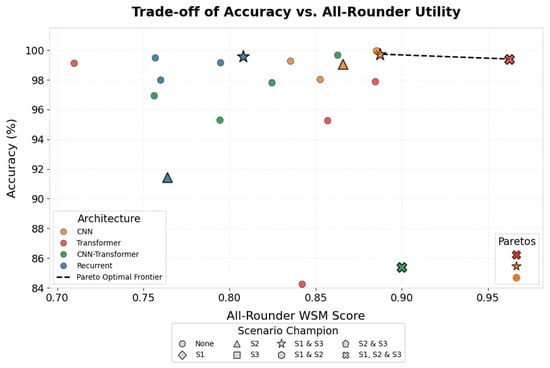
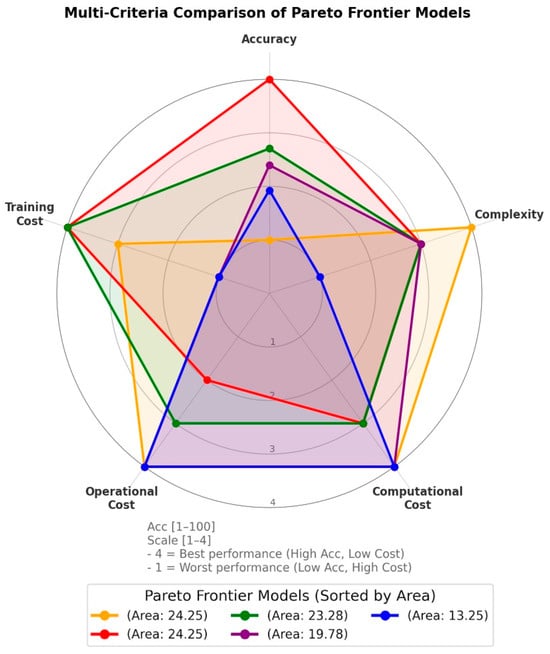
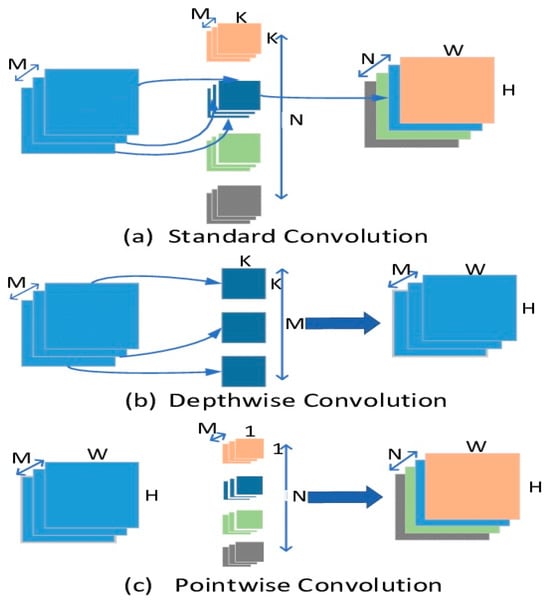
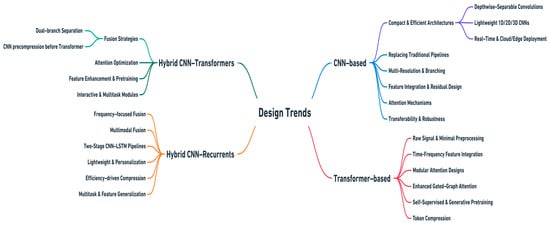
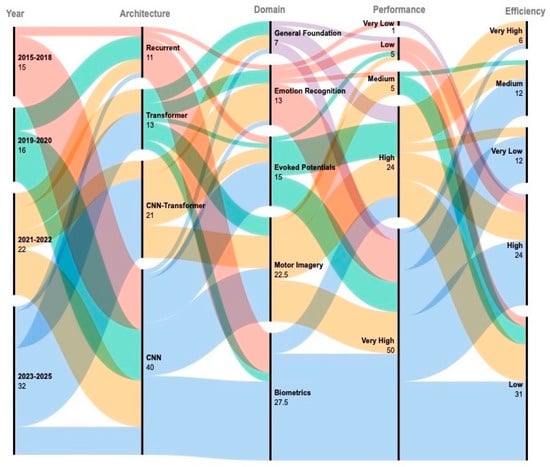
Feature extraction (FE) is an important step in electroencephalogram (EEG)-based classification for brain–computer interface (BCI) systems and neurocognitive monitoring. However, the dynamic and low-signal-to-noise nature of EEG data makes achieving robust FE challenging. Recent deep learning (DL) advances have offered alternatives to traditional manual feature engineering by enabling end-to-end learning from raw signals. In this paper, we present a comparative review of 88 DL models published over the last decade, focusing on EEG FE. We examine convolutional neural networks (CNNs), Transformer-based mechanisms, recurrent architectures including recurrent neural networks (RNNs) and long short-term memory (LSTM), and hybrid models. Our analysis focuses on architectural adaptations, computational efficiency, and classification performance across EEG tasks. Our findings reveal that efficient EEG FE depends more on architectural design than model depth. Compact CNNs offer the best efficiency–performance trade-offs in data-limited settings, while Transformers and hybrid models improve long-range temporal representation at a higher computational cost. Thus, the field is shifting toward lightweight hybrid designs that balance local FE with global temporal modeling. This review aims to guide BCI developers and future neurotechnology research toward efficient, scalable, and interpretable EEG-based classification frameworks.
Full article
(This article belongs to the Topic Theoretical Foundations and Applications of Deep Learning Techniques)
►▼
Show Figures

Figure 1
Open AccessArticle
Real-Time Optimal Parameter Recommendation for Injection Molding Machines Using AI with Limited Dataset
by
Bipasha Roy, Silvia Krug and Tino Hutschenreuther
AI 2026, 7(2), 49; https://doi.org/10.3390/ai7020049 - 1 Feb 2026
Abstract
This paper presents an efficient parameter optimization approach to the plastic injection molding process to achieve high productivity. In collaboration with a company specializing in plastic injection-mold-based production, real process data was collected and used in this research. The result is an integrated
[...] Read more.
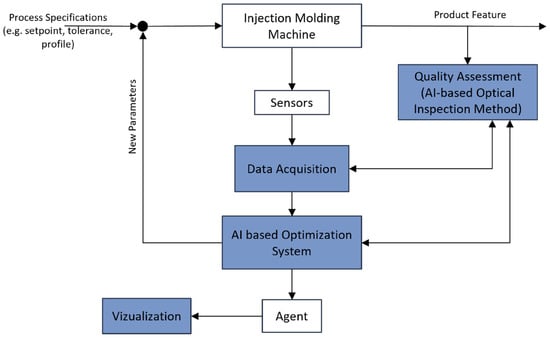
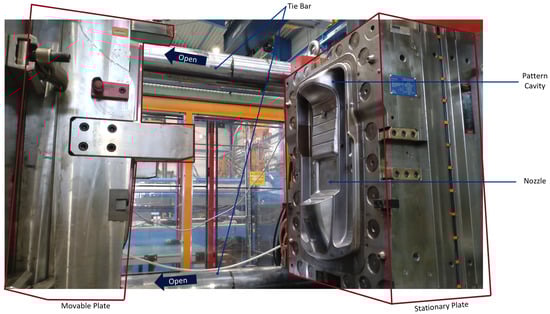
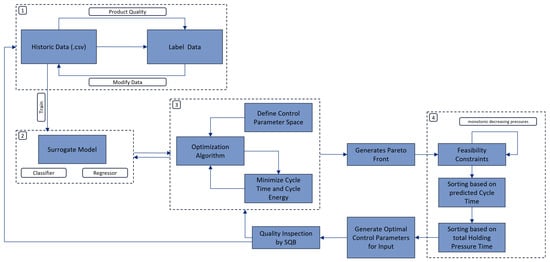
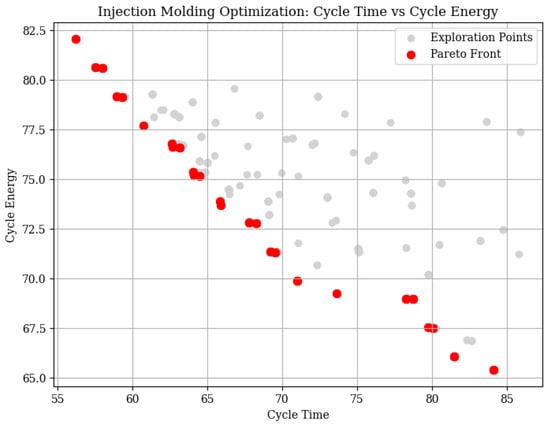
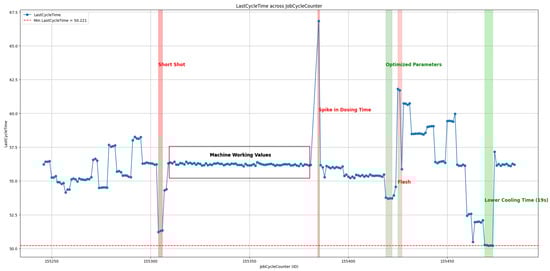
This paper presents an efficient parameter optimization approach to the plastic injection molding process to achieve high productivity. In collaboration with a company specializing in plastic injection-mold-based production, real process data was collected and used in this research. The result is an integrated framework, combining a genetic algorithm (GA) with a CatBoost-based surrogate model for multi-objective optimization of the injection molding machine parameters. The aim of the optimization is to minimize the cycle time and cycle energy while maintaining the product quality. Ten process parameters were optimized, which are machine-specific. An evolutionary optimization using the NSGA-II algorithm is used to generate the recommended parameter set. The proposed GA-surrogate hybrid approach produces the optimal set of parameters that reduced the cycle time by 4.5%, for this specific product, while maintaining product quality. Cycle energy was evaluated on an hourly basis; its variation across candidate solutions was limited, but it was retained as an optimization objective to support energy-based process optimization. A total of 95% of the generated solutions satisfied industrial quality constraints, demonstrating the robustness of the proposed optimization framework. While classical Design of Experiment (DOE) approaches require sequential physical trials, the proposed GA-surrogate framework achieves convergence in computational iterations, which significantly reduces machine usage for optimization. This approach demonstrates a practical way to automate data-driven process optimization in an injection mold machine for an industrial application, and it can be extended to other manufacturing systems that require adaptive control parameters.
Full article
(This article belongs to the Special Issue Artificial Intelligence in Industrial Systems: From Data Acquisition to Intelligent Decision-Making)
►▼
Show Figures

Figure 1

Open AccessArticle
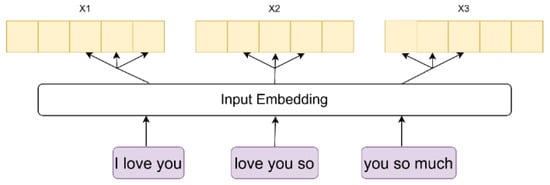
SpADE-BERT: Multilingual BERT-Based Model with Trigram-Sensitive Tokenization, Tuned for Depression Detection in Spanish Texts
by
Abdiel Reyes-Vera, Magdalena Saldana-Perez, Marco Moreno-Ibarra and Juan Pablo Francisco Posadas-Durán
AI 2026, 7(2), 48; https://doi.org/10.3390/ai7020048 - 1 Feb 2026
Abstract
This article proposes an automated approach, based on artificial intelligence techniques, for detecting indicators of depression in texts written in Spanish. Among the main contributions is the construction of a new specialized corpus, supervised by mental health professionals and based on the Beck
[...] Read more.
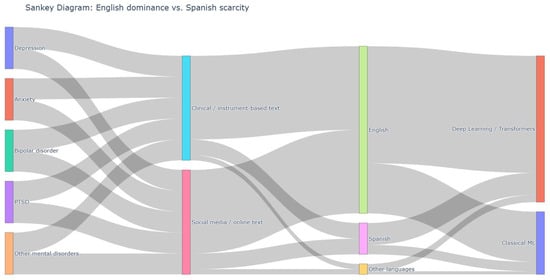
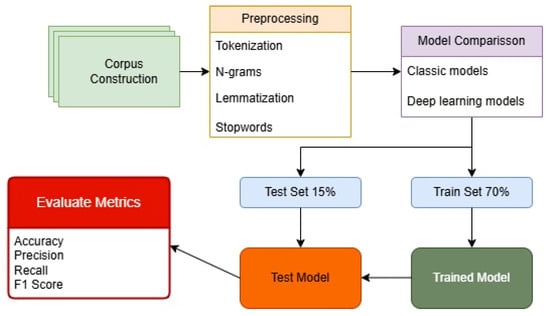
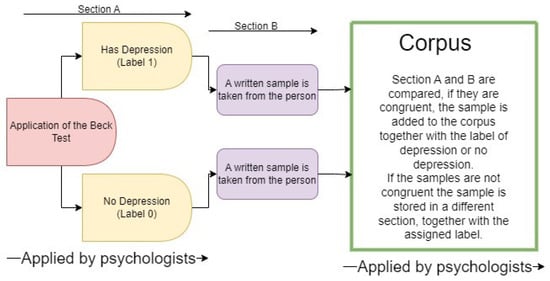
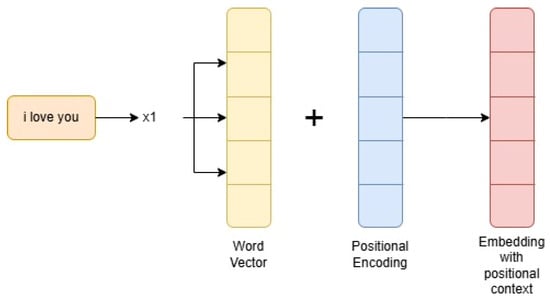
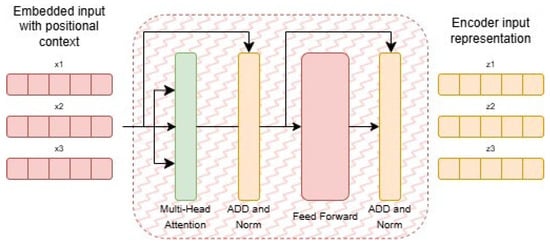
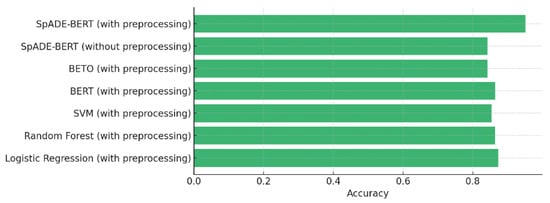
This article proposes an automated approach, based on artificial intelligence techniques, for detecting indicators of depression in texts written in Spanish. Among the main contributions is the construction of a new specialized corpus, supervised by mental health professionals and based on the Beck Depression Inventory. Text processing included linguistic techniques such as lemmatization, stopword removal, and structural transformation using trigrams. As part of the work, SpADE-BERT was designed, a model based on multilingual BERT with a tokenization scheme adapted to incorporate trigrams directly from the input phase. This modification allowed for more robust interaction between the local context and semantic representations. SpADE-BERT was evaluated against multiple approaches reported in the literature, which employ algorithms such as logistic regression, support vector machines, decision trees, and Random Forest with advanced configurations and specialized preprocessing. In all cases, our model showed consistently superior performance on metrics such as precision, recall, and F1-score. The results show that integrating deep language models with adapted tokenization strategies can significantly strengthen the automated identification of linguistic signals associated with depression in Spanish texts.
Full article
(This article belongs to the Topic Applications of NLP, AI, and ML in Software Engineering)
►▼
Show Figures

Figure 1

Open AccessArticle
An Implantable Antenna Design Optimized Using PSO Algorithm
by
Michael P. Nguyen, Lauren Linkous, Michael J. Suche and Ryan B. Green
AI 2026, 7(2), 47; https://doi.org/10.3390/ai7020047 - 1 Feb 2026
Abstract
People suffering from chronic diseases like diabetes, heart disease, and Parkinson’s disease are reliant on their implantable devices to improve their quality of life and to manage their chronic conditions. Despite their advantages, some systems are battery-powered, which can lead to battery failure,
[...] Read more.
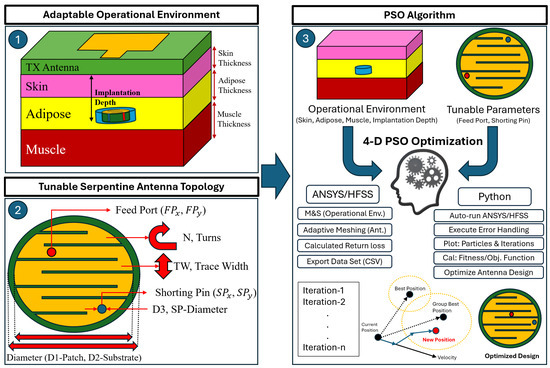
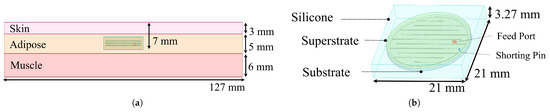
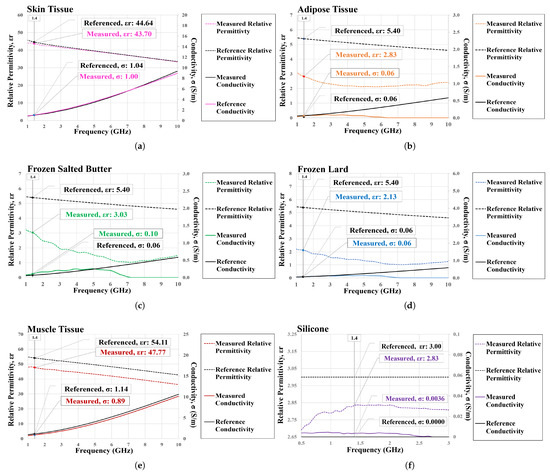
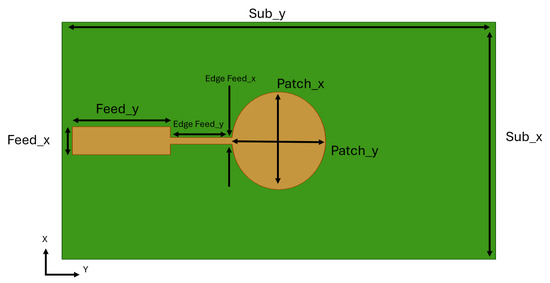
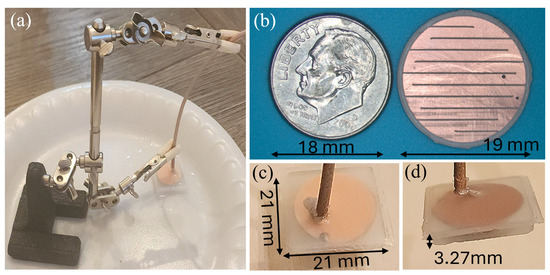
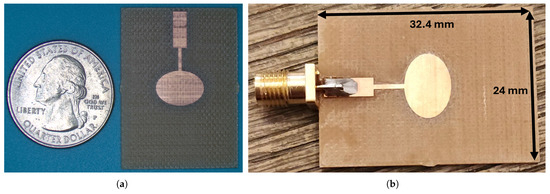
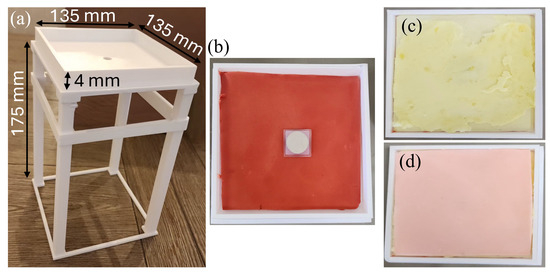
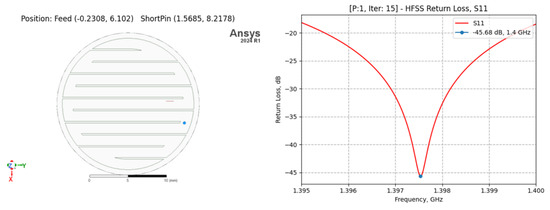
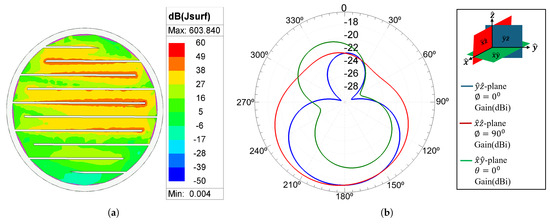
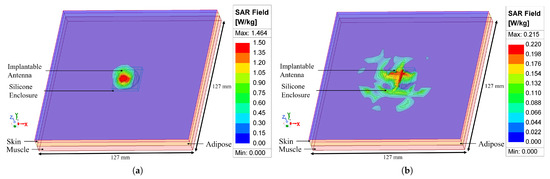
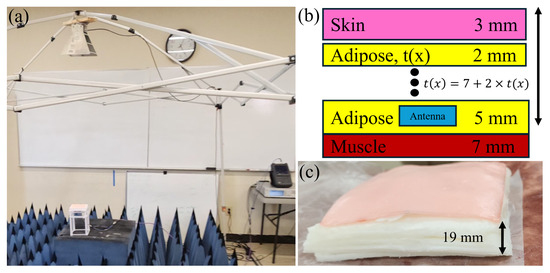
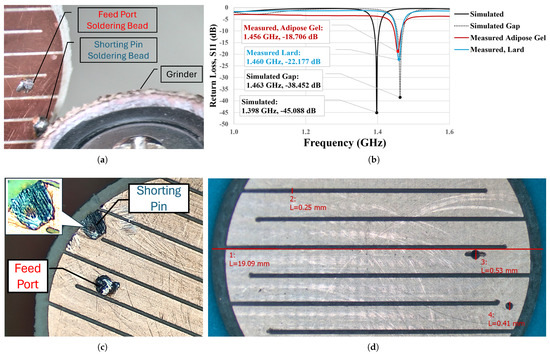
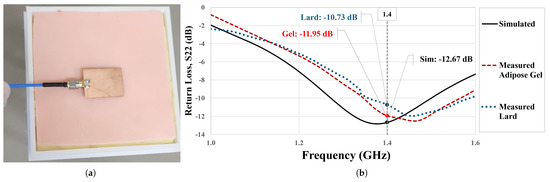
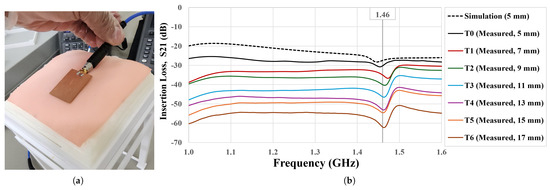
People suffering from chronic diseases like diabetes, heart disease, and Parkinson’s disease are reliant on their implantable devices to improve their quality of life and to manage their chronic conditions. Despite their advantages, some systems are battery-powered, which can lead to battery failure, resulting in prophylactic surgery. One solution to this issue is an implantable antenna that provides an adequate link margin across various skin sites. In this study, we introduce an implantable antenna design optimized using an open-source PSO algorithm. The antenna is a tunable WMTS-motivated design fabricated on a Rogers 6010.2 substrate and evaluated by simulation and in vitro testing using phantom tissues. Validation measurements are performed to evaluate the effects of implantation depth across various adipose thicknesses.
Full article
(This article belongs to the Topic Innovations in AI and Signal Processing for Advanced Sensing, Radar, RFID, and Communication Systems)
►▼
Show Figures

Figure 1

Open AccessArticle
A Federated Deep Q-Network Approach for Distributed Cloud Testing: Methodology and Case Study
by
Aicha Oualla, Oussama Maakoul, Salma Azzouzi and My El Hassan Charaf
AI 2026, 7(2), 46; https://doi.org/10.3390/ai7020046 - 1 Feb 2026
Abstract
The rapid expansion of the Internet of Things (IoT) has brought forth numerous challenges in testing distributed applications within cloud environments. A significant issue is the latency associated with hosting these applications on cloud computing platforms, despite their potential to improve productivity and
[...] Read more.
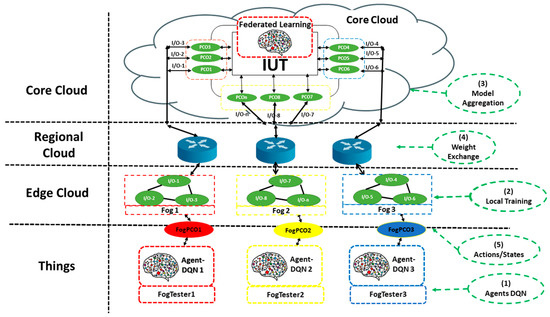
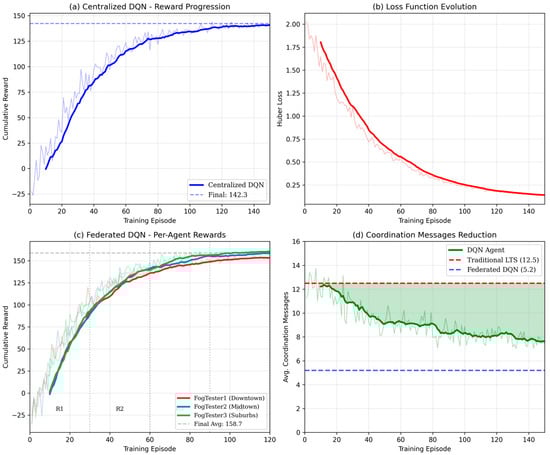
The rapid expansion of the Internet of Things (IoT) has brought forth numerous challenges in testing distributed applications within cloud environments. A significant issue is the latency associated with hosting these applications on cloud computing platforms, despite their potential to improve productivity and reduce costs. This necessitates a reevaluation of existing conformance testing frameworks for cloud environments, with a focus on addressing coordination and observability challenges during data processing. To tackle these challenges, this study proposes a novel approach based on Deep Q-Networks (DQN) and federated learning (FL). In this model, fog nodes train their local models independently and transmit only parameter updates to a central server, where these updates are aggregated into a global model. The DQN agents replace explicit coordination messages with learned decision functions, dynamically determining when and how testers should coordinate. This approach not only preserves the privacy of IoT devices but also enhances the efficiency of the testing process. We provide a comprehensive mathematical formulation of our approach, along with a detailed case study of a Smart City Traffic Management System. Our experimental results demonstrate significant improvements over traditional testing approaches, including a ~58% reduction in coordination messages. These findings confirm the effectiveness of our approach for distributed testing in dynamic environments with varying network conditions.
Full article
(This article belongs to the Topic Federated Edge Intelligence for Next Generation AI Systems)
►▼
Show Figures

Figure 1
Open AccessArticle
A Deep Learning Framework for Ultrasound Image Quality Assessment and Automated Nuchal Translucency Measurement to Improve First-Trimester Chromosomal Abnormality Screening
by
Roa Omar Baddad, Amani Yousef Owda and Majdi Owda
AI 2026, 7(2), 45; https://doi.org/10.3390/ai7020045 - 1 Feb 2026
Abstract
►▼
Show Figures
Background: First-trimester prenatal screening is a fundamental component of modern obstetric care, offering early insights into fetal health and development. A key focus of this screening is the detection of chromosomal abnormalities, such as Trisomy 21 (Down syndrome), which can have significant implications
[...] Read more.
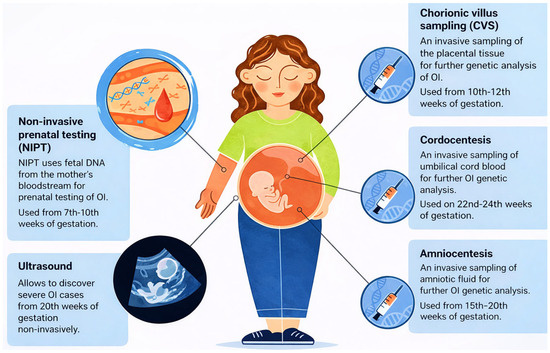
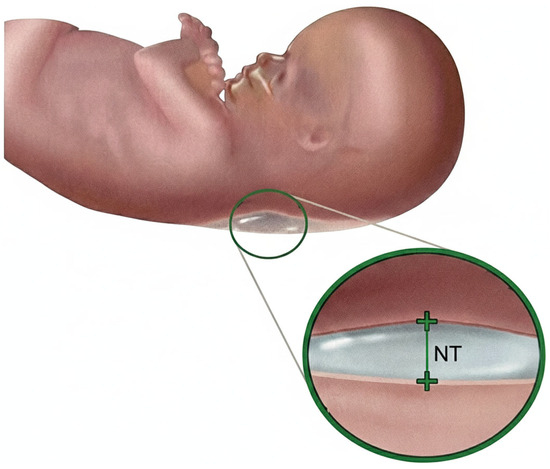
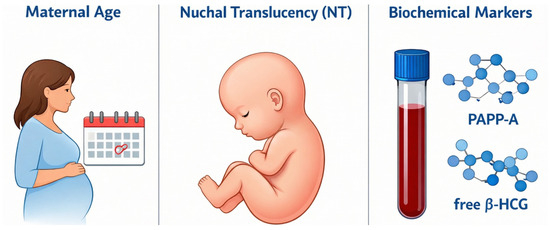
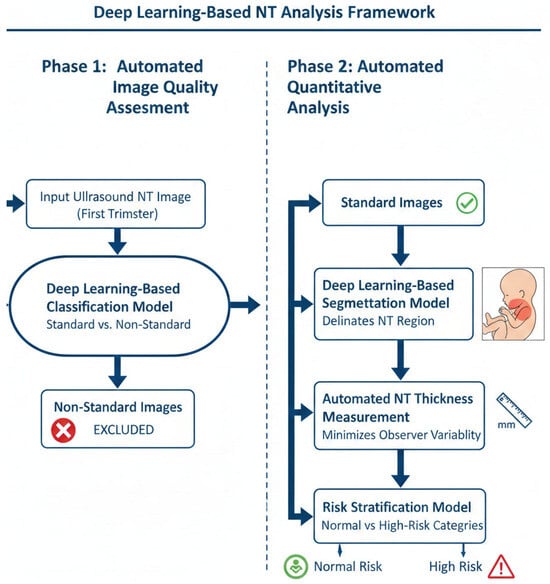
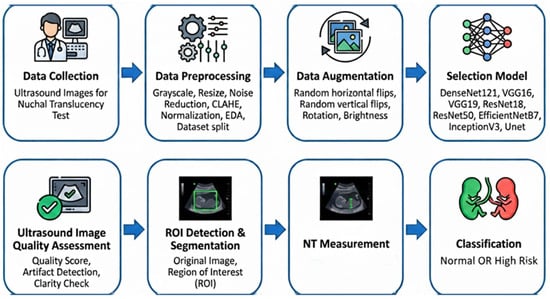
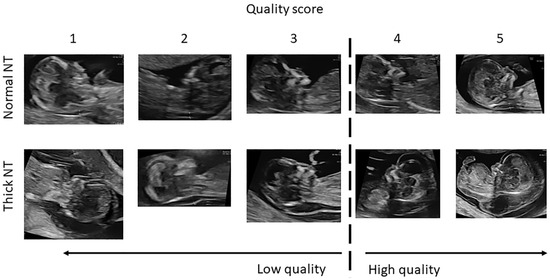
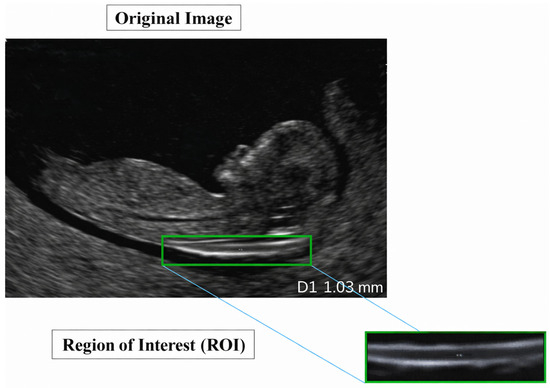
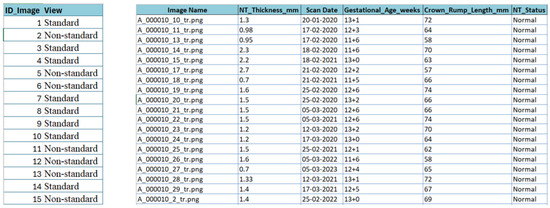
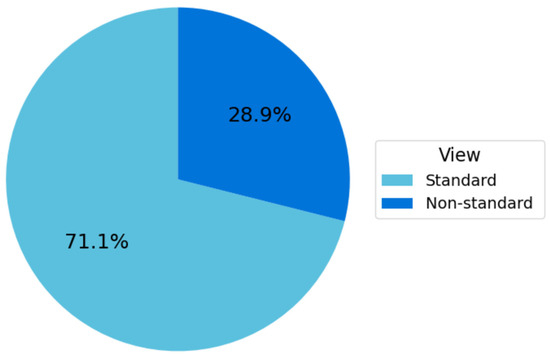
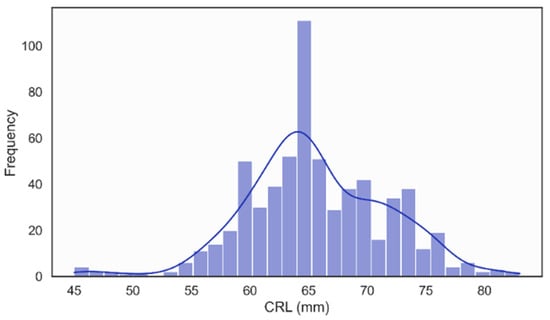
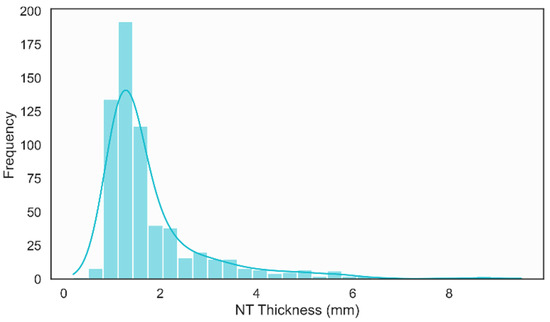
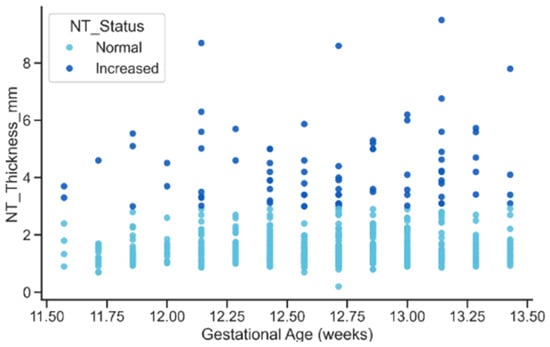
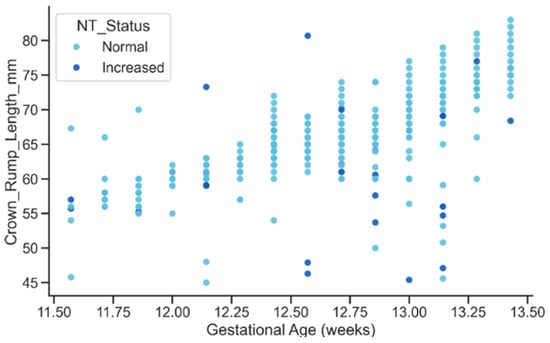
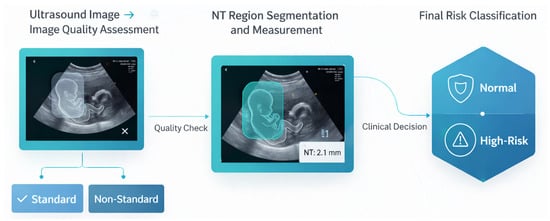
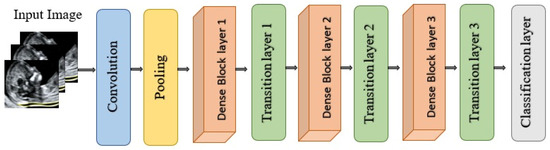
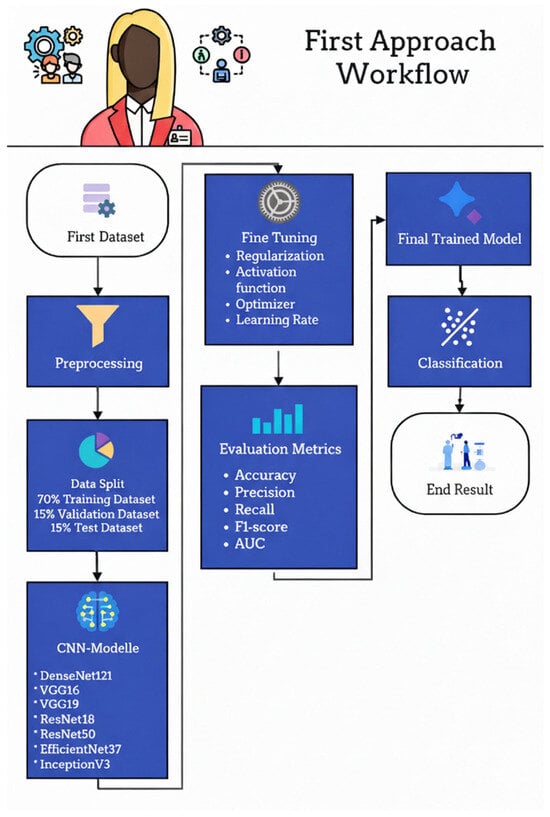
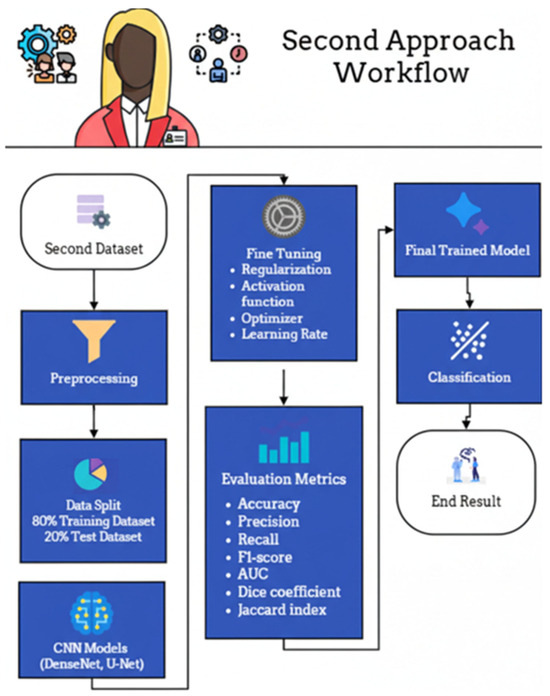
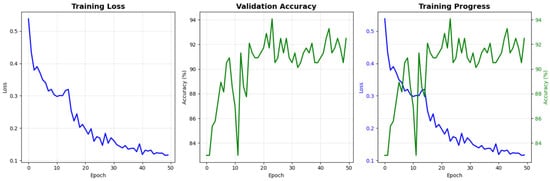
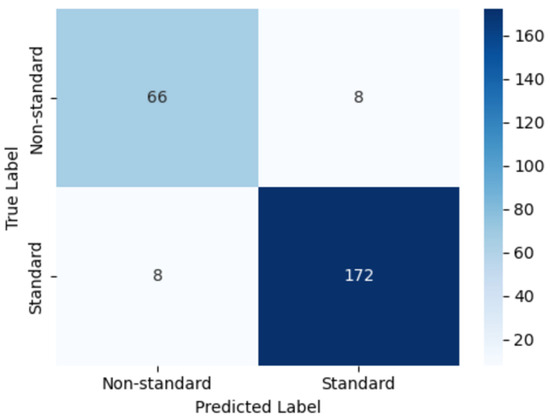
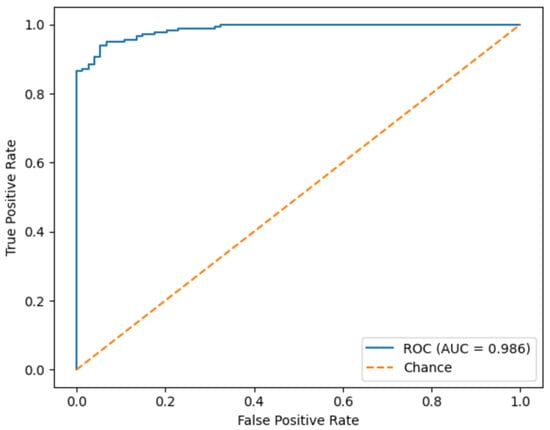
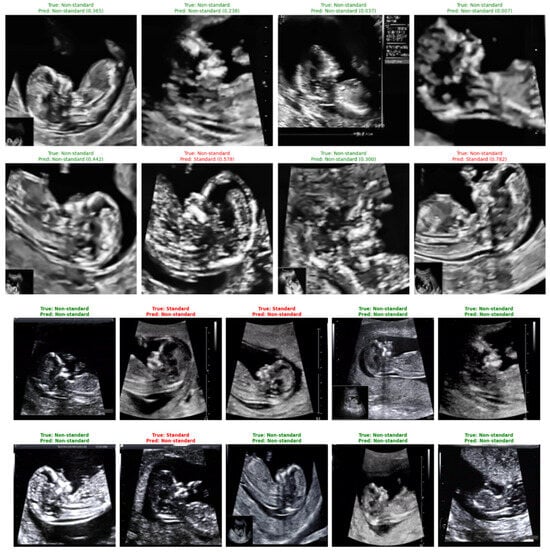
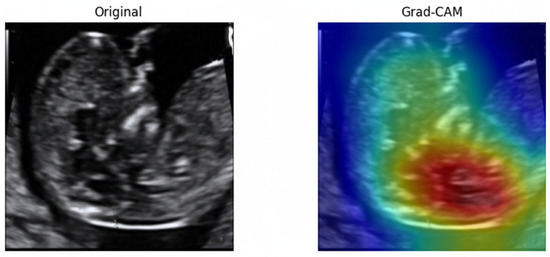
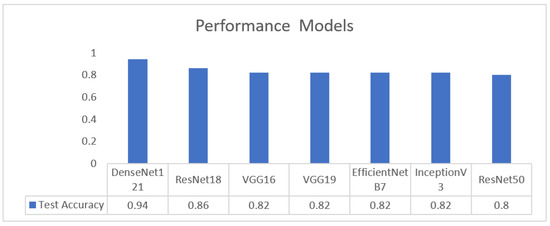
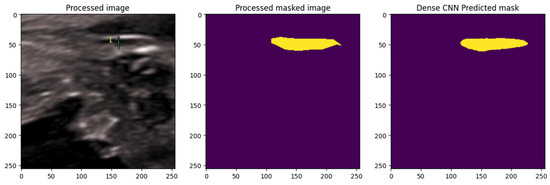
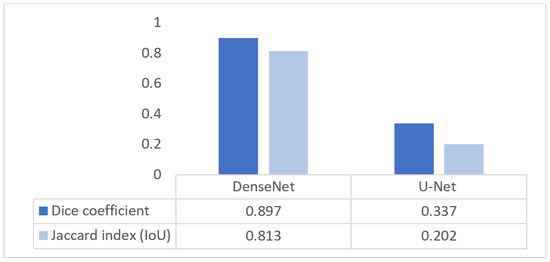
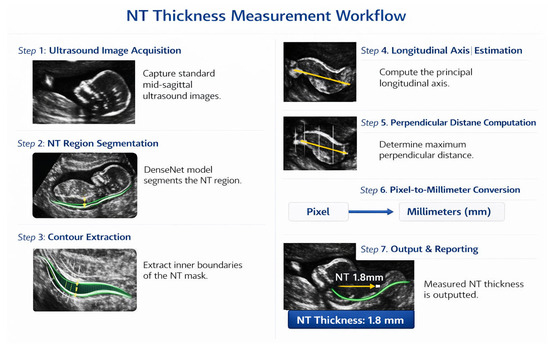
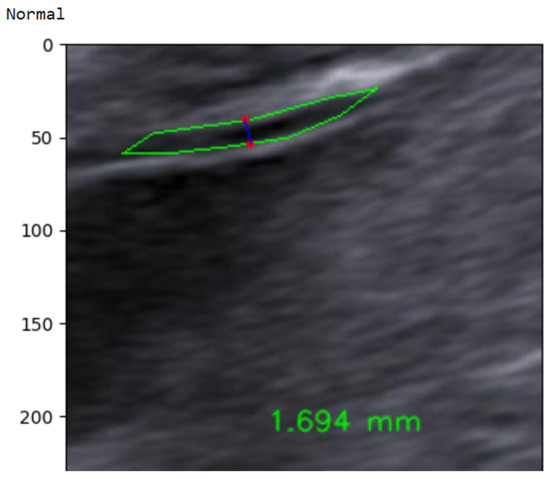
Background: First-trimester prenatal screening is a fundamental component of modern obstetric care, offering early insights into fetal health and development. A key focus of this screening is the detection of chromosomal abnormalities, such as Trisomy 21 (Down syndrome), which can have significant implications for pregnancy management and parental counseling. Over the years, various non-invasive methods have been developed, with ultrasound-based assessments becoming a cornerstone of early evaluation. Among these, the measurement of Nuchal Translucency (NT) has emerged as a critical marker. This sonographic measurement, typically performed between 11- and 13-weeks 6+ days of gestation, quantifies the fluid-filled space at the back of the fetal neck. An increased NT measurement is a well-established indicator of a higher risk for aneuploidies and other congenital conditions, including heart defects. The Fetal Medicine Foundation has established standardized criteria for this measurement to ensure its reliability and widespread adoption in clinical practice. Methods: We utilized two datasets comprising 2425 ultrasound images from Shenzhen People’s Hospital China and the National Hospital of Obstetrics and Gynecology Vietnam. The methodology employs a two-stage Deep Learning framework: first, a DenseNet121 model assesses image quality to filter non-standard planes; second, a novel DenseNet-based segmentation delineates the NT region for automated measurement. Results: The quality assessment module achieved 94% accuracy in distinguishing standard from non-standard planes. For segmentation, the proposed model achieved a Dice coefficient of 0.897 and an overall accuracy of 98.9%, outperforming the standard U-Net architecture. Clinically, 55.47% of automated measurements deviated by less than 1 mm from expert annotations, and the system demonstrated > 90% sensitivity and specificity for identifying high-risk cases (NT ≥ 2.5 mm). Conclusions: The proposed framework successfully integrates quality assurance with automated measurement, offering a robust decision-support tool to reduce variability and improve screening accuracy in prenatal care.
Full article

Figure 1
Open AccessArticle
Resource-Aware Deep Learning Deployment for IoT–Fog Environments: A Novel BSIR and RAG-Enhanced Approach
by
Mostafa Atlam, Gamal Attiya and Mohamed Elrashidy
AI 2026, 7(2), 44; https://doi.org/10.3390/ai7020044 - 30 Jan 2026
Abstract
►▼
Show Figures
The proliferation of Internet of Things (IoT) devices challenges deep learning (DL) deployment due to their limited computational power, while cloud offloading introduces high latency and network strain. Fog computing provides a viable middle ground. We present a resource-aware framework that intelligently partitions
[...] Read more.
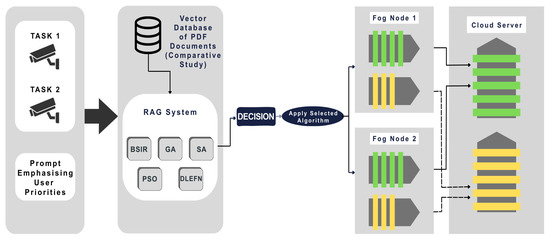
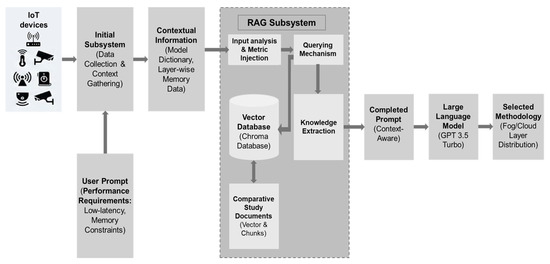
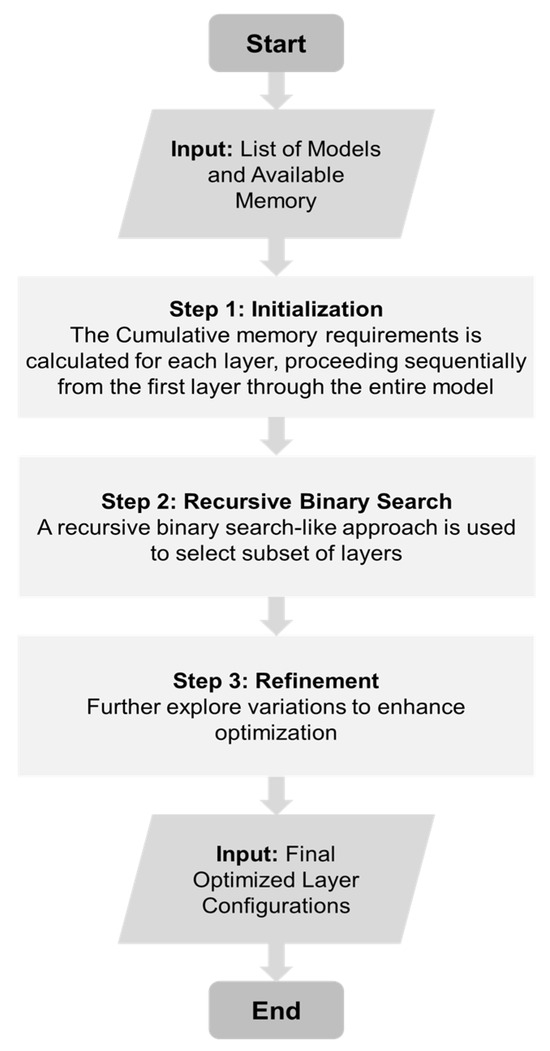
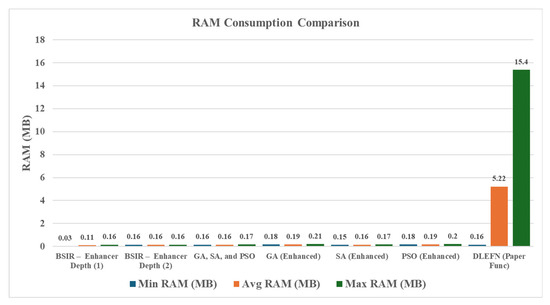
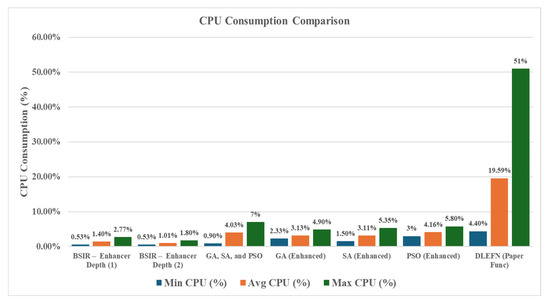
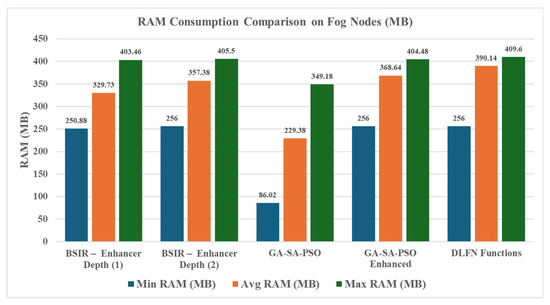
The proliferation of Internet of Things (IoT) devices challenges deep learning (DL) deployment due to their limited computational power, while cloud offloading introduces high latency and network strain. Fog computing provides a viable middle ground. We present a resource-aware framework that intelligently partitions DL tasks between fog nodes and the cloud using a novel Binary Search-Inspired Recursive (BSIR) optimization algorithm for rapid, low-overhead decision-making. This is enhanced by a novel module that fine-tunes deployment by analyzing memory at a per-layer level. For true adaptability, a Retrieval-Augmented Generation (RAG) technique consults a knowledge base to dynamically select the best optimization strategy. Our experiments demonstrate dramatic improvements over established metaheuristics. The complete framework boosts memory utilization in fog environments to a remarkable 99%, a substantial leap from the 85.25% achieved by standard algorithms like Genetic Algorithms (GA), Simulated Annealing (SA), and Particle Swarm Optimization (PSO). The enhancement module alone improves these traditional methods by over 13% without added computational cost. Our system consistently operates with a CPU footprint under 3% and makes decisions in fractions of a second, significantly outperforming recent methods in speed and resource efficiency. In contrast, recent DL methods may use 51% CPU and take over 90 s for the same task. This framework effectively reduces cloud dependency, offering a scalable solution for DL in the IoT landscape.
Full article

Figure 1
Open AccessReview
Artificial Intelligence in Endometriosis Imaging: A Scoping Review
by
Rawan AlSaad, Thomas Farrell, Ali Elhenidy, Shima Albasha and Rajat Thomas
AI 2026, 7(2), 43; https://doi.org/10.3390/ai7020043 - 29 Jan 2026
Abstract
Endometriosis is a chronic gynecological condition characterized by endometrium-like tissue outside the uterus. In clinical practice, diagnosis and anatomical mapping rely heavily on imaging, yet performance remains operator- and modality-dependent. Artificial intelligence (AI) has been increasingly applied to endometriosis imaging. We conducted a
[...] Read more.
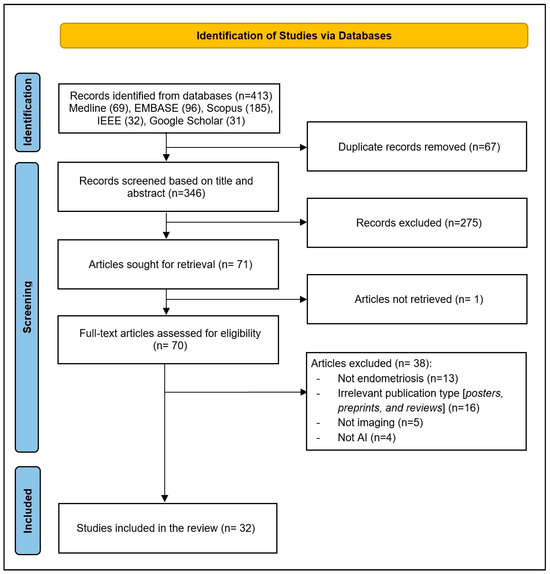
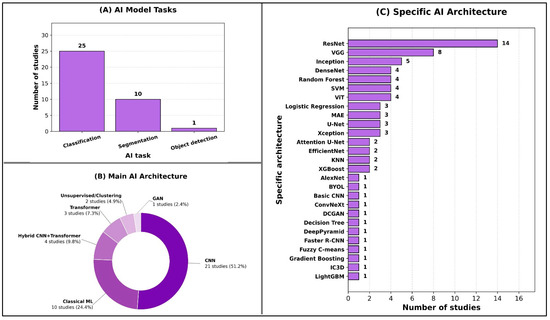
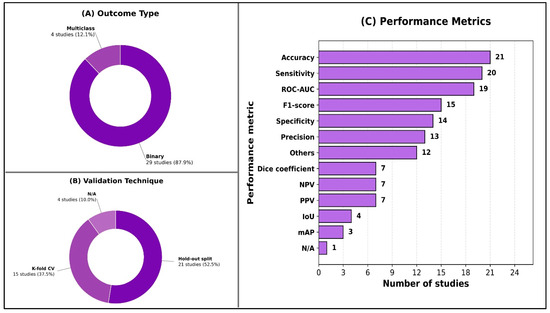
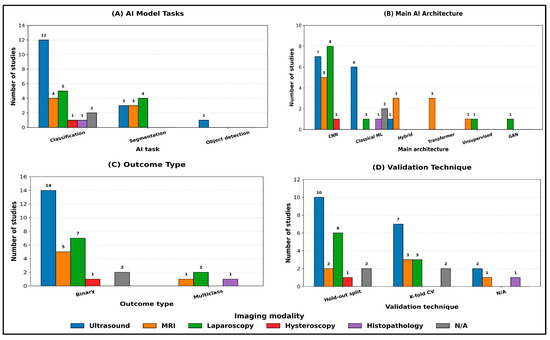
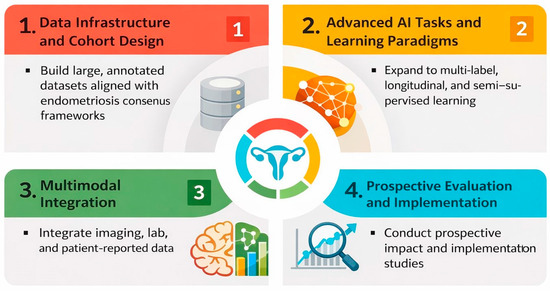
Endometriosis is a chronic gynecological condition characterized by endometrium-like tissue outside the uterus. In clinical practice, diagnosis and anatomical mapping rely heavily on imaging, yet performance remains operator- and modality-dependent. Artificial intelligence (AI) has been increasingly applied to endometriosis imaging. We conducted a PRISMA-ScR-guided scoping review of primary machine learning and deep learning studies using endometriosis-related imaging. Five databases (MEDLINE, Embase, Scopus, IEEE Xplore, and Google Scholar) were searched from 2015 to 2025. Of 413 records, 32 studies met inclusion and most were single-center, retrospective investigations in reproductive-age cohorts. Ultrasound predominated (50%), followed by laparoscopic imaging (25%) and MRI (22%); ovarian endometrioma and deep infiltrating endometriosis were the most commonly modeled phenotypes. Classification was the dominant AI task (78%), typically using convolutional neural networks (often ResNet-based), whereas segmentation (31%) and object detection (3%) were less explored. Nearly all studies relied on internal validation (97%), most frequently simple hold-out splits with heterogeneous, accuracy-focused performance reporting. The minimal AI-method quality appraisal identified frequent methodological gaps across key domains, including limited reporting of patient-level separation, leakage safeguards, calibration, and data and code availability. Overall, AI-enabled endometriosis imaging is rapidly evolving but remains early-stage; multi-center and prospective validation, standardized reporting, and clinically actionable detection–segmentation pipelines are needed before routine clinical integration.
Full article
(This article belongs to the Special Issue Deep Learning Technologies and Their Applications in Image Processing, Computer Vision, and Computational Intelligence)
►▼
Show Figures

Figure 1
Highly Accessed Articles
Latest Books
E-Mail Alert
News
Topics
Topic in
AI, Buildings, Electronics, Symmetry, Smart Cities, Urban Science, Automation
Application of Smart Technologies in Buildings
Topic Editors: Yin Zhang, Limei Peng, Ming TaoDeadline: 28 February 2026
Topic in
AI, Applied Sciences, Bioengineering, Healthcare, IJERPH, JCM, Clinics and Practice, J. Imaging
Artificial Intelligence in Public Health: Current Trends and Future Possibilities, 2nd EditionTopic Editors: Daniele Giansanti, Giovanni CostantiniDeadline: 15 March 2026
Topic in
AI, BDCC, Fire, GeoHazards, Remote Sensing
AI for Natural Disasters Detection, Prediction and Modeling
Topic Editors: Moulay A. Akhloufi, Mozhdeh ShahbaziDeadline: 31 March 2026
Topic in
AI, Applied Sciences, Systems, JTAER, Healthcare
Data Science and Intelligent Management
Topic Editors: Dongxiao Gu, Jiantong Zhang, Jia LiDeadline: 30 April 2026
Conferences
Special Issues
Special Issue in
AI
Privacy-Preserving Deep Learning Techniques for Audio Data: Challenges and Advances
Guest Editors: Carmelo Pino, Massimo Orazio Spata, Francesco Rundo, Angelo Alberto MessinaDeadline: 5 March 2026
Special Issue in
AI
Understanding Transformers and Large Language Models (LLMs) with Natural Language Processing (NLP)
Guest Editors: Massimo Stella, Alexis Carrillo RamirezDeadline: 18 March 2026
Special Issue in
AI
AI Learning for Control of Predictive Vehicle Dynamics
Guest Editor: Domenico BianchiDeadline: 27 March 2026
Special Issue in
AI
AI for Sustainable and Resilient Cyber-Physical Systems
Guest Editor: Jin Wei-KocsisDeadline: 31 March 2026